Bridging Digital and Brick-and-Mortar: How Unified POS-Gateway Hybrids Tackle Recurring Billing Headaches
Bridging Digital and Brick-and-Mortar: How Unified POS-Gateway Hybrids Tackle Recurring Billing Headaches
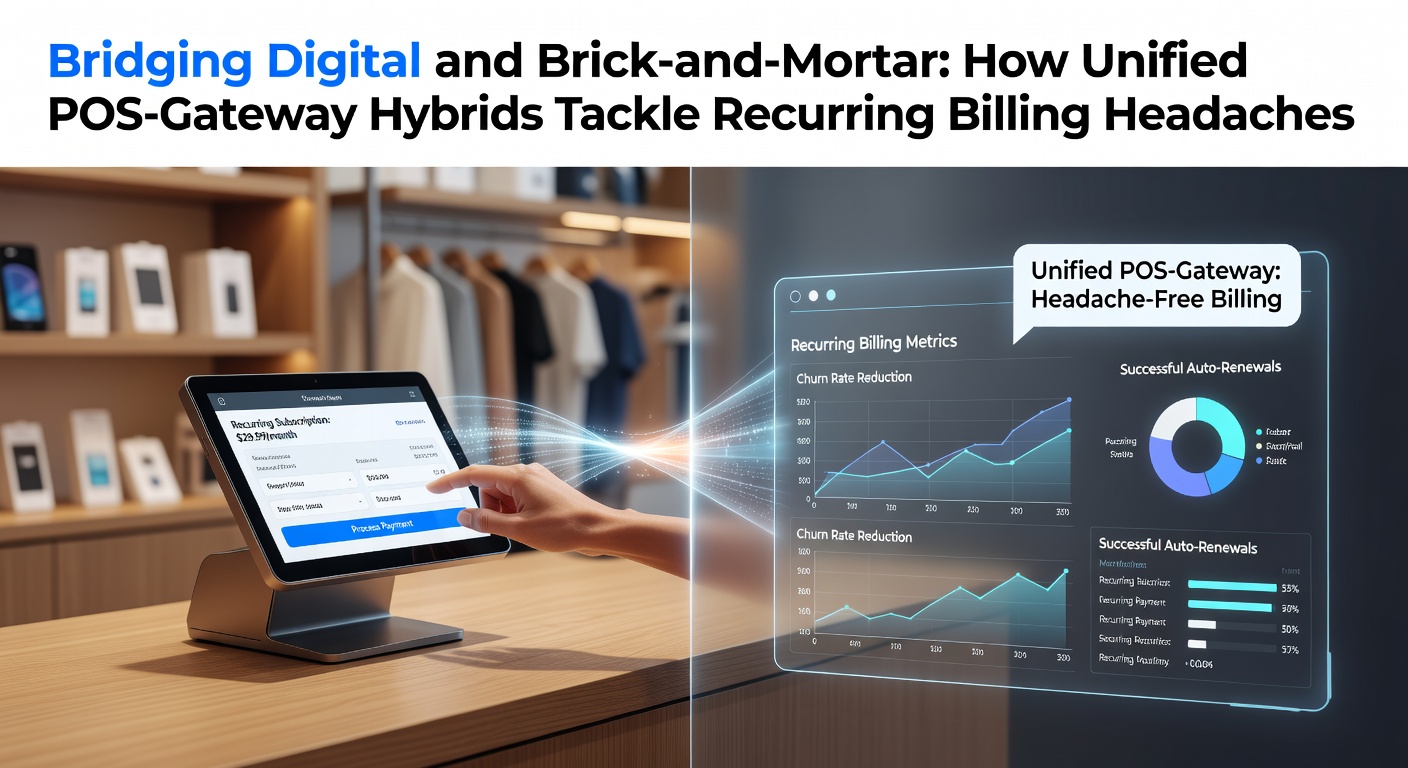
The Growing Pains of Recurring Billing in Hybrid Retail Environments
Retailers today juggle online subscriptions and in-store sign-ups, yet recurring billing often trips them up with failed transactions, data silos between digital platforms and physical POS systems, and compliance hurdles that vary by region; small mismatches in customer profiles lead to 15-25% involuntary churn rates, according to figures from the Electronic Transactions Association (ETA), a U.S.-based industry group tracking payment trends.
Take gyms offering monthly memberships signed up via app or kiosk; one expired card means lost revenue unless retry logic kicks in seamlessly across channels, but legacy setups force separate processors for e-commerce gateways and countertop terminals, creating friction that frustrates customers and spikes support costs. Brick-and-mortar spots like coffee shops with loyalty subscriptions face similar issues, where in-store taps don't sync with online renewals, leading to awkward charge disputes or abandoned carts.
And here's where it gets tricky: as omnichannel retail booms—projected to hit 60% of sales by 2027 per National Retail Federation data—businesses without unified tools lose ground fast, since fragmented systems can't handle the real-time vaulting needed for secure token storage post-initial payment.
Unpacking Unified POS-Gateway Hybrids: The Tech at the Core
These hybrids merge point-of-sale hardware with payment gateways into one platform, enabling merchants to process one-time buys, recurring charges, and installments whether the customer stands at a register or browses a website; developers build them on APIs that unify tokenization—so a card entered in-store generates a persistent token usable online—and embed smart retry mechanisms that ping updated payment methods without manual intervention.
Picture a boutique clothing store: a shopper buys a subscription box via the website, then visits the physical location for an add-on; the hybrid system recognizes the token instantly, applies the recurring profile, and processes without redundant PCI-compliant entry, slashing exposure to data breaches that plague siloed setups.
Key components include cloud-based vaults for storing payment details compliant with standards like PCI DSS 4.0, dynamic linking between EMV chip readers on terminals and hosted checkout pages, and analytics dashboards revealing churn patterns; observers note how such integration cuts processing fees by 20-30% through volume consolidation, while handling multi-currency for global chains effortlessly.
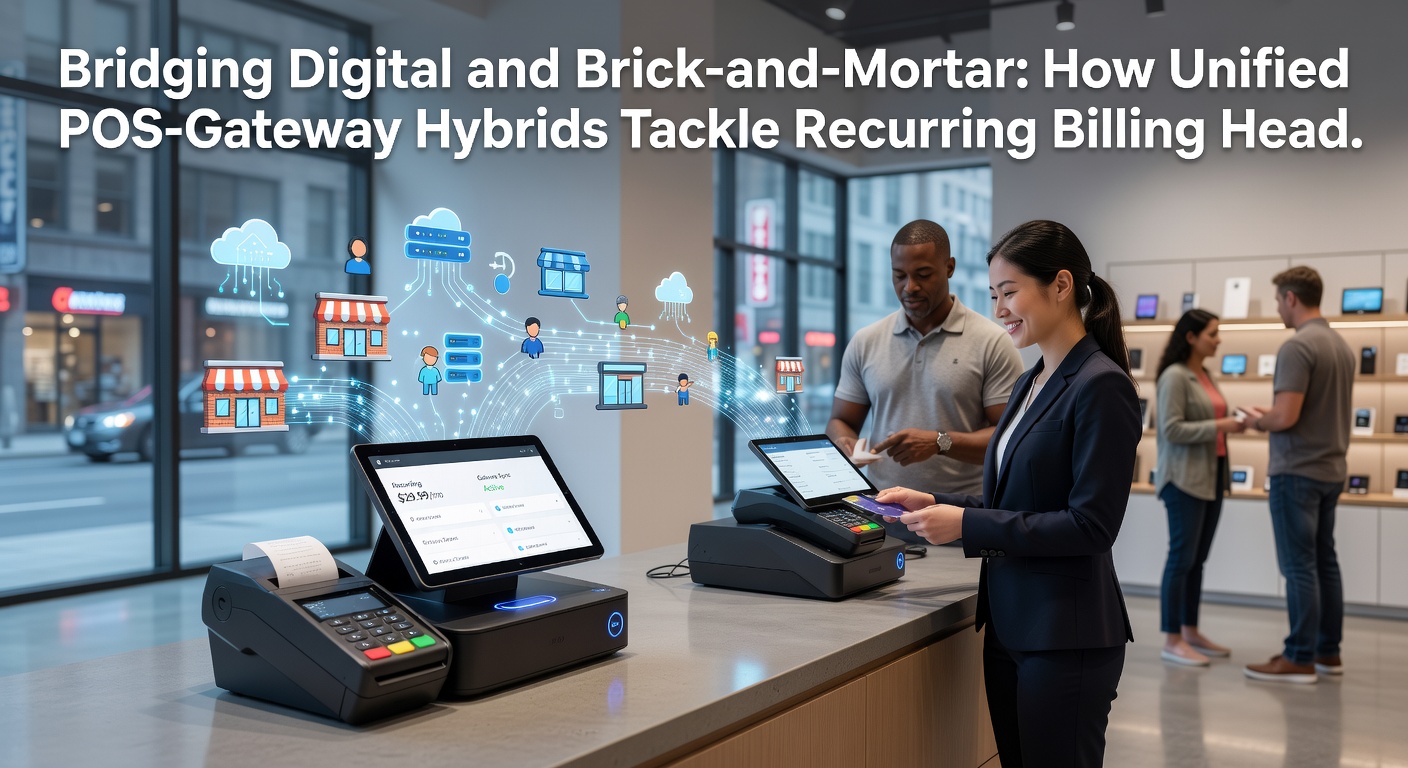
How These Systems Crush Common Recurring Billing Pain Points
Seamless Data Synchronization Across Channels
Fragmented customer data vanishes under hybrids, as they sync profiles in real time—updates to billing info from an online portal reflect immediately at the POS, preventing declines that hit 82% recovery rates with automated dunning compared to 20% manual efforts, data from a Australian Securities and Investments Commission (ASIC) fintech review indicates for hybrid merchants.
Subscription box services, for instance, report fewer support tickets when in-store pickups trigger loyalty renewals without separate logins, since the system vaults everything centrally.
Built-In Compliance and Risk Management
Regulatory demands intensify with SCA under EU PSD2 and similar mandates elsewhere, yet hybrids automate 3D Secure checks for both digital and contactless in-store payments, embedding fraud detection that flags anomalies like unusual geolocations; Canadian merchants benefit particularly, as FCAC guidelines stress unified auditing, reducing violation risks that cost averages of $50,000 per incident.
What's interesting here involves velocity checks preventing abuse, where rapid sign-ups across channels trigger holds, all while maintaining flow for legitimate recurring pulls.
Cost Efficiencies and Scalability
Multiple vendors mean layered fees—gateways at 2.9% plus POS markups—but hybrids negotiate unified rates, often dipping below 2.5%, and scale effortlessly for seasonal spikes like holiday subscriptions; one study from researchers at the University of Toronto's Rotman School found adopters cut total ownership costs by 35% within a year, thanks to fewer integrations and vendor wrangling.
Real-World Wins: Case Studies from the Trenches
A regional chain of fitness centers rolled out a hybrid in 2024, merging Square-like POS with Stripe gateways; post-launch, recurring revenue jumped 28% as failed payments dropped from 18% to 3%, with trainers signing up members in-person using the same app customers managed online, creating a fluid experience that boosted retention.
Meal kit providers with warehouse pickup options tell a similar story: one outfit integrated Authorize.net hybrids, enabling curbside renewals via terminal scans of QR codes linked to subscriptions; churn fell sharply, and they handled a 40% Black Friday surge without hiccups, since the system batched retries overnight.
Even SaaS-adjacent retailers like custom apparel shops use these for "print-on-demand" subs, where in-store design stations feed directly into gateway-vaulted recurring charges; experts who've tracked such shifts observe how customer lifetime value climbs 50% when friction evaporates across touchpoints.
But here's the thing with scaling internationally: hybrids support regional nuances, like Brazil's PIX instant payments alongside card recurs, keeping global franchises aligned without custom hacks.
Navigating the Regulatory Maze with Hybrid Tools
Compliance evolves rapidly—U.S. states like California mandate clear recurring consent disclosures, while EU firms gear up for PSD3 drafts emphasizing open banking ties; hybrids embed these via configurable rules engines, auto-generating notices and handling strong customer authentication across POS NFC taps and web forms.
Australia's ASIC pushes for transparent fee structures in recurring models, and adopters leverage hybrids' reporting to export compliant logs instantly; turns out, this proactive stance dodges fines that averaged AUD 100,000 last year for non-unified processors.
Looking ahead, April 2026 marks a pivotal shift as Canada's Payments Canada rolls out real-time rail expansions, pressuring hybrids to incorporate ISO 20022 messaging for cross-border recurs, ensuring low-latency retries even in multi-jurisdiction setups.
Emerging Trends and What's Next for Unified Hybrids
AI-driven predictions layer on now, with hybrids forecasting churn via spending patterns and proactively suggesting payment updates; blockchain pilots for token portability gain traction, promising even tighter security without central vaults.
Voice commerce integrations let customers renew subs at smart registers, while embedded finance turns any POS into a billing hub for partners; data shows early adopters in Europe see 15% uplift in cross-sell success, blending one-time upsells with recurring streams seamlessly.
Yet challenges linger around legacy migrations—businesses with decade-old terminals invest in hybrid bridges, but ROI materializes within quarters for high-volume ops; observers predict 70% adoption among mid-tier retailers by 2028, driven by competitive pressures.
Conclusion
Unified POS-gateway hybrids stand as game-changers for retailers wrestling recurring billing woes, knitting digital agility with physical reliability into systems that minimize failures, enforce compliance, and unlock revenue; as hybrid shopping dominates, those leveraging these tools position themselves ahead, turning headaches into steady cash flow across every channel.
Merchants eyeing upgrades find plug-and-play options galore, with platforms like Toast or Lightspeed leading charges tailored for omnichannel demands; the writing's on the wall—adapt now, thrive later.