Charting Tokenization Pathways: How Encryption Layers Fortify Subscription Renewals Against Data Breach Vectors
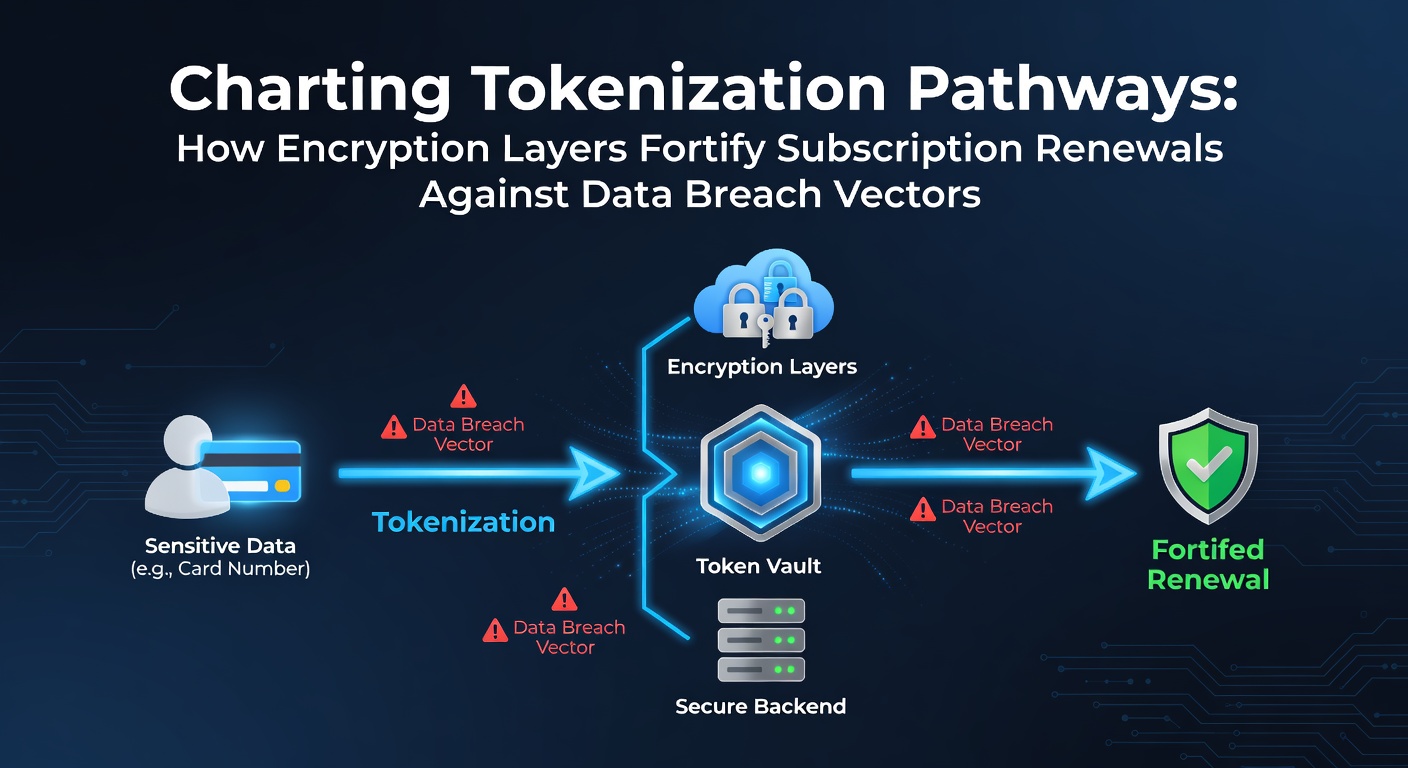
Subscription services rely on recurring payments that cycle through sensitive card data on a monthly or annual basis, and tokenization replaces that primary account information with unique identifiers that hold no intrinsic value outside specific merchant environments. Researchers at payment security institutions have documented how this substitution reduces the appeal of stolen records because tokens cannot be repurposed across unrelated platforms. Encryption layers wrap both the token generation process and its transmission, creating multiple barriers that data breach attempts must penetrate sequentially.
Tokenization Fundamentals in Recurring Billing Systems
Payment networks issue tokens through a process that begins when a cardholder authorizes the first transaction, after which the issuer or a certified token service provider maps the real credentials to an alternate string. Merchants store only the token and a cryptogram that refreshes with each renewal cycle, while the original numbers remain in secure vaults controlled by the issuing bank. Studies conducted by standards bodies show that organizations adopting this model experienced measurable declines in stored data exposure during audits performed through 2025 and into early 2026.
Service providers integrate these tokens directly into billing engines so that scheduled renewals trigger authorization requests without ever retrieving full card details from local databases. The pathway includes validation steps where the token and dynamic cryptogram travel together through encrypted channels, and issuers verify both elements before approving the charge. Observers note that this architecture shifts liability away from merchants because they no longer retain reversible payment credentials after the initial setup.
Encryption Layers Supporting Token Lifecycles
Multiple encryption protocols operate at different stages, starting with point-to-point encryption at teh point of capture and extending through transport layer security during every data exchange. Application-level encryption then protects token repositories themselves, requiring separate keys that rotate on defined schedules. According to guidance published by the National Institute of Standards and Technology, combining these controls creates defense-in-depth configurations that limit the blast radius of any single compromise.
Key management systems distribute cryptographic material across segregated environments so that even if one server is accessed, attackers still lack the components needed to decrypt stored tokens or forge new authorization requests. Hardware security modules enforce access policies and log every key usage event, supplying audit trails that compliance teams review during regulatory examinations. Data compiled by industry analysts in the first quarter of 2026 indicated that firms maintaining strict key rotation schedules recorded lower incident response costs following attempted intrusions.
Pathways for Secure Subscription Renewals
Renewal sequences follow a defined route that begins with the billing system retrieving the stored token and associated cryptogram, then forwarding an authorization request over encrypted links to the payment processor. The processor relays the request to the card network, which resolves the token back to the underlying account only within its protected infrastructure. Successful approvals return new cryptograms that replace previous values, maintaining forward secrecy for subsequent cycles.
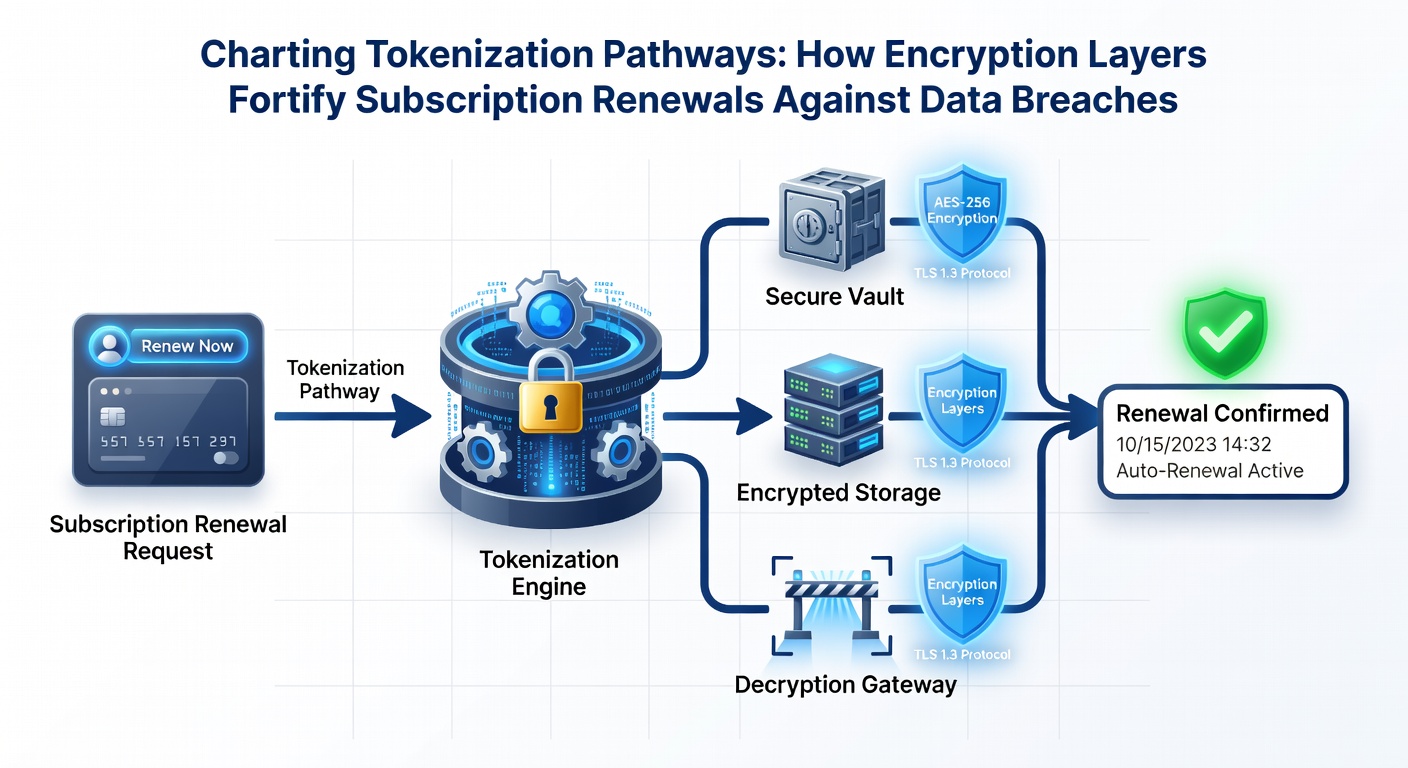
Merchants that implement automated credential updates receive notification when a card expires or is reissued, allowing seamless replacement of tokens without requiring customers to re-enter details. European Union payment service regulations effective through 2026 require such continuity measures to minimize service interruptions, and similar expectations appear in Canadian and Australian oversight frameworks. Those who've examined breach reports across regions find that tokenized environments consistently appear in lower-risk categories within annual data compromise summaries.
Addressing Data Breach Vectors Through Layered Controls
Common attack paths such as database exfiltration or network interception encounter layered encryption that renders captured tokens unusable without corresponding keys and network-specific context. Point-of-sale or API endpoints that accept initial card data apply immediate encryption before any storage occurs, closing windows that previously allowed skimming malware to harvest usable information. Research published in academic journals on cybersecurity economics shows that organizations deploying combined tokenization and encryption experienced extended time-to-compromise metrics during simulated penetration exercises.
Monitoring systems flag anomalous renewal patterns, such as repeated authorization failures from unexpected geographic locations, and trigger additional verification steps before processing continues. These controls operate alongside standard velocity checks that limit the number of renewal attempts within defined periods. Figures released by payment card industry security councils reveal progressive adoption rates of tokenization services among subscription-heavy sectors between 2024 and May 2026, correlating with reduced volumes of compromised recurring credentials appearing on illicit marketplaces.
Conclusion
Tokenization pathways combined with successive encryption layers establish structured defenses that protect subscription renewal processes from common data breach vectors. Standards organizations and regulatory bodies across multiple jurisdictions continue to reference these methods in updated security guidelines, while implementation data collected through early 2026 documents measurable reductions in exposure for participating merchants. Continued refinement of key management and cryptogram rotation practices supports ongoing resilience as attack techniques evolve.