How Batch Settlement Rhythms Shape Supply Chain Timing for Mobile Vendors Operating Across Temporary Event Networks

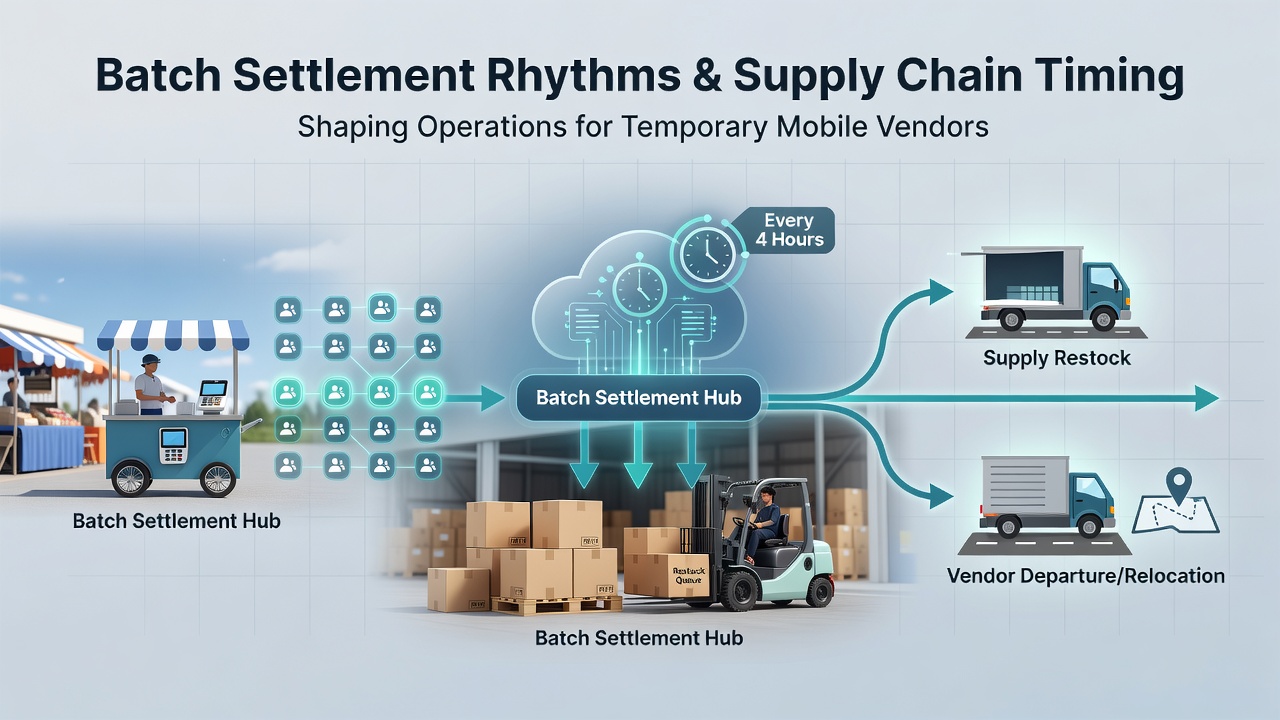
Mobile vendors who operate across temporary event networks face settlement cycles that directly influence when they reorder inventory and coordinate deliveries. Batch settlement groups multiple transactions into single processing windows, and these rhythms determine payout speed for vendors who rely on card payments at festivals, markets, and pop-up gatherings. Data from payment processors shows that most temporary networks process batches at fixed intervals, often daily or every 48 hours, which creates predictable yet rigid timing constraints for supply chain managers.
Researchers tracking vendor operations note that supply ordering often aligns with these batch release dates because vendors need cleared funds before they can pay wholesalers. When batches settle overnight, funds typically appear in accounts the next business day, allowing purchases to proceed without cash flow gaps. Yet delays occur when high-volume event days push batches into secondary review queues, pushing payouts by 24 to 72 hours in documented cases across North American festival circuits.
Mechanics of Batch Processing in Event-Based Commerce
Batch settlement works by collecting authorization records from point-of-sale devices and transmitting them to acquiring banks at predetermined times. Vendors using mobile terminals submit batches at event close or during scheduled sync windows, and the acquiring bank then forwards requests to card networks. Observers note that this process reduces per-transaction fees compared with real-time settlement, which explains its continued use among operators who manage dozens of short-term locations each season.
Those who study temporary networks report that vendors often calibrate restocking schedules around the batch cutoff times posted by their processors. A vendor at a multi-day outdoor market, for example, might hold inventory orders until the previous day's batch clears, avoiding overdraft risks when supplier invoices arrive. Studies from the Federal Reserve Bank of New York indicate that such timing coordination becomes more pronounced during peak seasons when event density increases transaction volumes and extends reconciliation periods.
Supply Chain Ripple Effects Across Distributed Locations
Supply chain timing shifts when batch rhythms change because vendors must forecast cash availability rather than rely on immediate credits. Wholesalers who serve these networks frequently offer credit terms tied to verified settlement reports, so a delayed batch can postpone delivery windows and force vendors to source smaller, more expensive local stock. Figures from industry reports reveal that vendors operating across three or more events per week experience the strongest correlation between settlement speed and reorder frequency.
One documented pattern shows vendors adjusting supplier contracts to include flexible delivery dates that match batch calendars rather than fixed weekly schedules. This adjustment reduces stockouts but increases coordination costs as logistics teams track both event calendars and processor settlement windows simultaneously. Researchers have observed that networks using unified gateway systems experience fewer mismatches because the same platform handles both authorization logs and batch releases, allowing vendors to predict payout dates with higher accuracy.
Regional Variations and July 2026 Developments
Payment timing standards differ by region, and vendors who travel internationally must adapt to multiple batch schedules. European networks often close batches earlier in the evening than North American counterparts, while operators in Australia align batches with end-of-day reporting requirements that can extend into the next calendar day. According to guidance from Payments Canada, vendors crossing borders benefit from processors that support multi-currency batch reporting, which reduces conversion delays that otherwise compound supply timing issues.
July 2026 marks the scheduled rollout of updated batch reporting protocols across several major event-management platforms, and early testing indicates these changes will shorten average settlement windows by several hours for high-volume vendors. Those monitoring the transition note that supply chains serving festival circuits are already adjusting lead times in anticipation, with some wholesalers offering advance inventory holds that release only after batch confirmation arrives. Data from the European Central Bank shows similar protocol updates in prior years produced measurable reductions in vendor working-capital requirements during peak travel seasons.
Coordination Strategies Employed by Vendor Networks
Vendors who operate across temporary networks increasingly rely on integrated dashboards that display both pending batch status and upcoming supplier cutoff times. These tools allow teams to shift purchase orders forward or backward by a day when settlement projections change. Observers have documented cases where vendors who adopted such systems reduced emergency restocking expenses by aligning orders with confirmed payout dates rather than estimated ones.
Another approach involves negotiating staggered supplier payment terms that mirror batch release schedules, so invoices become due only after funds clear. This method requires accurate forecasting yet provides stability for vendors who cannot afford to carry large cash reserves between events. Research indicates that networks employing both dashboard visibility and flexible supplier terms maintain steadier inventory levels than those relying on fixed weekly ordering cycles.
Conclusion
Batch settlement rhythms establish the temporal framework within which mobile vendors plan supply movements across temporary event networks. Because payouts arrive in grouped intervals rather than continuously, vendors synchronize restocking, logistics, and supplier payments to these cycles. Regional differences in batch timing add further complexity for cross-border operators, and upcoming protocol changes scheduled for July 2026 are expected to alter these rhythms for many participants. The relationship between settlement speed and supply chain reliability remains central to operational planning in this sector, with data showing clear links between payout predictability and inventory continuity.