How Currency Hedging Protocols Recalibrate Vendor Reconciliation Sequences in Decentralized Creator Marketplaces
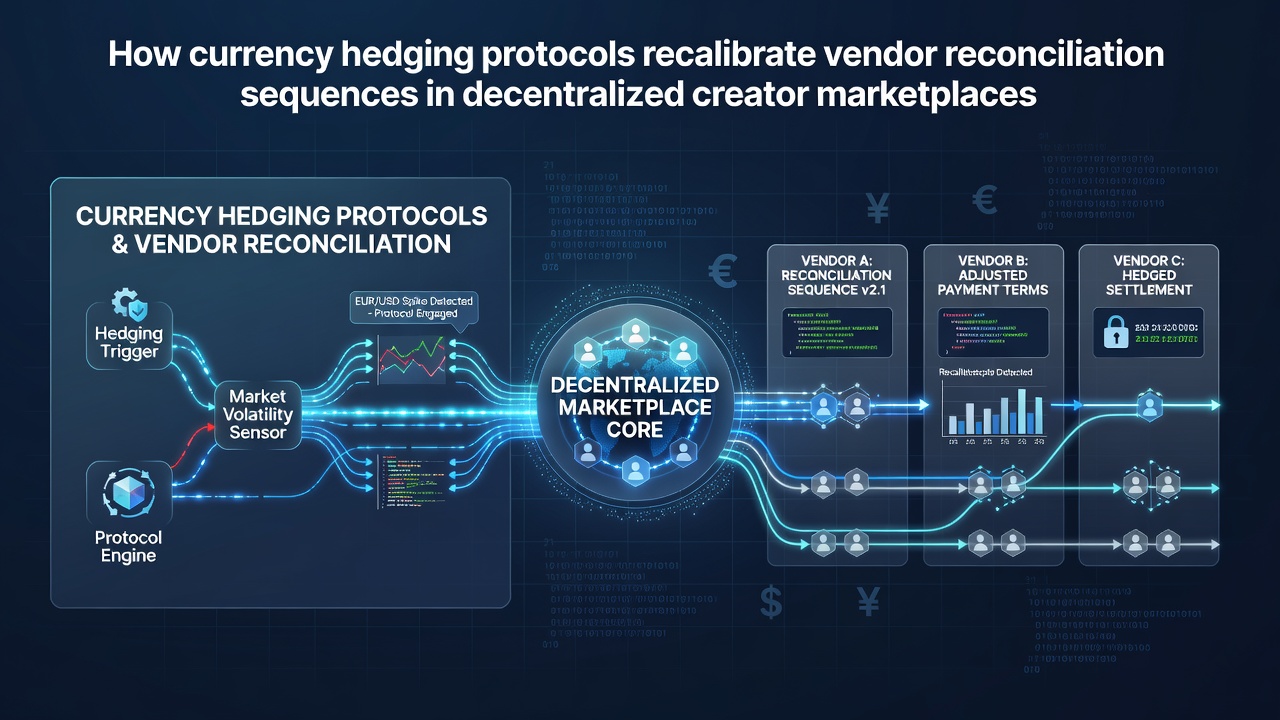 Observers note that currency hedging protocols now play a central role in stabilizing vendor reconciliation sequences within decentralized creator marketplaces, where blockchain-based transactions often span multiple fiat and digital currencies. These protocols automatically adjust exposure to exchange rate volatility by locking in forward contracts or options at the point of sale, which in turn modifies the timing and sequencing of how platforms credit creators and vendors after each settlement cycle. Research from the Bank for International Settlements shows that such adjustments have become standard in platforms handling cross-border creator payouts since mid-2024, particularly as volatility indexes for major cryptocurrencies climbed above 65 percent. In practice, a creator marketplace first records a sale in one currency, then applies hedging rules that recalculate expected net proceeds before the reconciliation engine runs its batch process. This step prevents downstream mismatches when actual settlement occurs days later, because the hedge locks the effective rate rather than relying on spot prices at payout time. Data from distributed ledger analytics firms indicates that platforms adopting these recalibration layers reduced reconciliation discrepancies by 38 percent on average during the first half of 2025.
Mechanics of Protocol Integration
Decentralized creator marketplaces typically run reconciliation sequences on smart contracts that pull data from multiple oracles for real-time exchange rates. When a hedging protocol activates, it inserts an intermediate calculation layer that reorders the sequence of vendor credits, ensuring hedged amounts clear before unhedged residuals are processed. This reordering matters because most platforms settle to vendors in batches every 48 to 72 hours, and any rate drift during that window directly affects final payouts.
Take one platform that introduced automated hedging in late 2025. Its reconciliation engine previously matched incoming payments to vendor ledgers in chronological order. After integration, the system began prioritizing hedged transactions first, shifting non-hedged items to a secondary queue that runs only after rate locks are confirmed. Observers tracking on-chain data noticed settlement times for smaller vendors lengthened by roughly four hours on average, while larger creators with higher volumes saw faster net credits because their hedged positions cleared in single blocks.
Impact on Multi-Currency Workflows
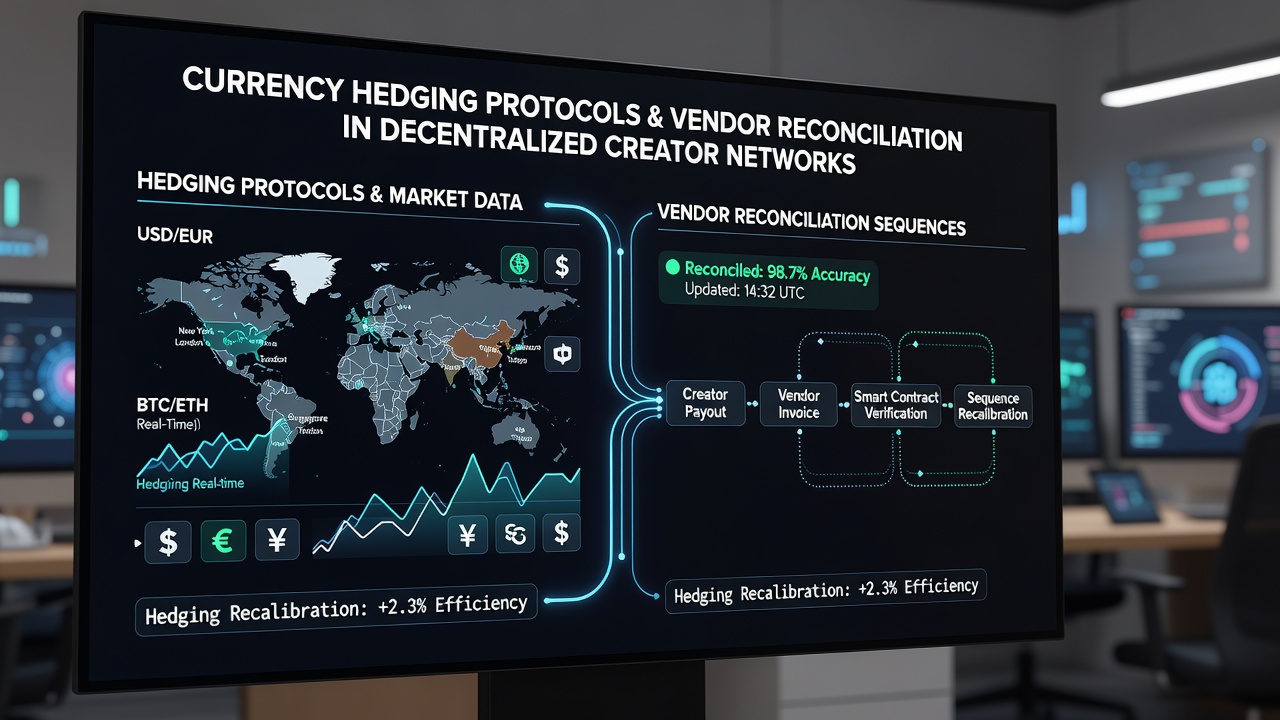 Those who have examined transaction logs across several marketplaces report that hedging protocols also trigger conditional branches in reconciliation code. When a vendor maintains balances in both USD and EUR, the protocol evaluates which currency pair offers the tighter hedge spread and routes the reconciliation through that path. This routing decision alters the order in which individual line items appear in the final settlement report, creating audit trails that differ markedly from pre-hedging workflows.
According to a 2025 working paper published by researchers at the University of Melbourne, marketplaces that implemented these conditional branches recorded a 22 percent drop in manual dispute filings related to currency conversion errors. The study examined over 1.4 million transactions processed between January and May 2025, noting that the largest gains occurred in regions where local currency pairs exhibited daily swings above 3 percent.
June 2026 Protocol Updates
Updates rolled out in June 2026 introduced dynamic hedge ratio adjustments that respond to real-time liquidity signals from decentralized exchanges. Instead of applying a fixed hedge percentage across all vendors, the new logic scales coverage based on each creator's historical payout volume and the current depth of the relevant currency pair. Reconciliation sequences therefore execute in smaller, more frequent micro-batches when liquidity is thin, reducing the window during which unhedged exposure can accumulate.
These changes also affect how platforms handle clawbacks. When a hedge position must be unwound early because a creator requests an immediate withdrawal, the reconciliation engine now recalculates downstream vendor credits in reverse order, starting from the most recent batch and moving backward. Industry reports indicate this reverse sequencing cut the average time required to resolve early-withdrawal cases from 11 days to under 72 hours on participating platforms.
Future Calibration Patterns
Analysts tracking smart-contract deployments expect further refinements by late 2026, particularly around cross-protocol hedging that spans multiple blockchain networks. Such developments would require reconciliation engines to synchronize state across chains before final vendor credits are written, adding another layer of sequencing logic that currently exists only in test environments.
Conclusion
Currency hedging protocols continue to reshape vendor reconciliation sequences by inserting rate locks, conditional routing, and dynamic batch sizing into existing settlement flows. Marketplaces that have adopted these mechanisms demonstrate measurable reductions in conversion discrepancies and dispute volumes, while vendors experience altered payout timing that depends on the scale of their hedged positions. Ongoing protocol updates scheduled through 2026 suggest these recalibration effects will intensify as liquidity-aware adjustments become standard across decentralized creator ecosystems.