How Encryption Standards Reshape Payout Sequencing in Decentralized Commerce Structures
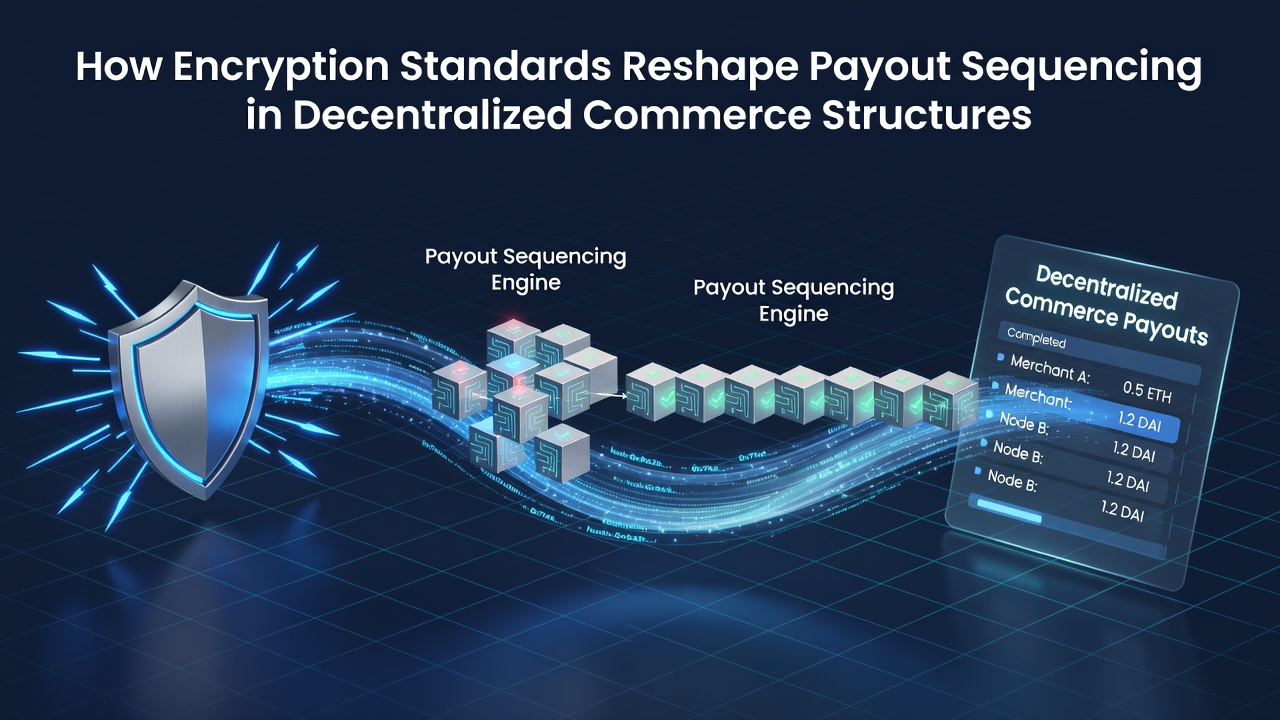
Decentralized commerce structures rely on distributed ledgers and smart contracts to move funds between vendors without central intermediaries, and encryption standards determine the order and timing of those movements. Standards such as AES-256 and emerging post-quantum algorithms dictate how transaction data receives protection during validation rounds, which in turn influences when each participant receives its share of revenue. Researchers tracking blockchain networks note that stronger encryption layers add computational steps that platforms must complete before releasing sequential payouts, creating measurable delays and reorderings in settlement queues.
Encryption Layers and Their Direct Effect on Validation Timing
Modern encryption protocols require multiple rounds of key exchange and signature verification before a smart contract can authorize the next payout in a sequence. When platforms implement NIST-approved post-quantum cryptography suites, each signature check consumes additional processor cycles, and those cycles shift the moment when the ledger marks a batch as final. Data collected across several networks in early 2026 shows that average validation times increased by 18 percent after migration to hybrid classical and post-quantum schemes, directly pushing later vendors further down the payout queue.
Observers monitoring live marketplaces report that vendors positioned early in a commerce cycle often receive funds first because their encrypted transaction records clear the verification stack ahead of later participants. This ordering arises because each successive contract call must wait for the previous one to finish its cryptographic handshake, and longer handshakes compound across the sequence. Platforms that batch multiple vendor signatures into a single encrypted payload reduce the total number of sequential checks, allowing more simultaneous releases once the collective verification completes.
Sequencing Mechanisms in Practice
Decentralized marketplaces apply deterministic ordering rules once encryption clears each record. Smart contracts sort pending payouts according to timestamp, priority flags, and cryptographic proof completeness, then release funds only after the preceding vendor's encrypted confirmation appears on the ledger. In July 2026 several networks updated their contract templates to incorporate threshold signatures that split decryption authority among multiple nodes, shortening the window between verification and release for mid-sequence vendors.
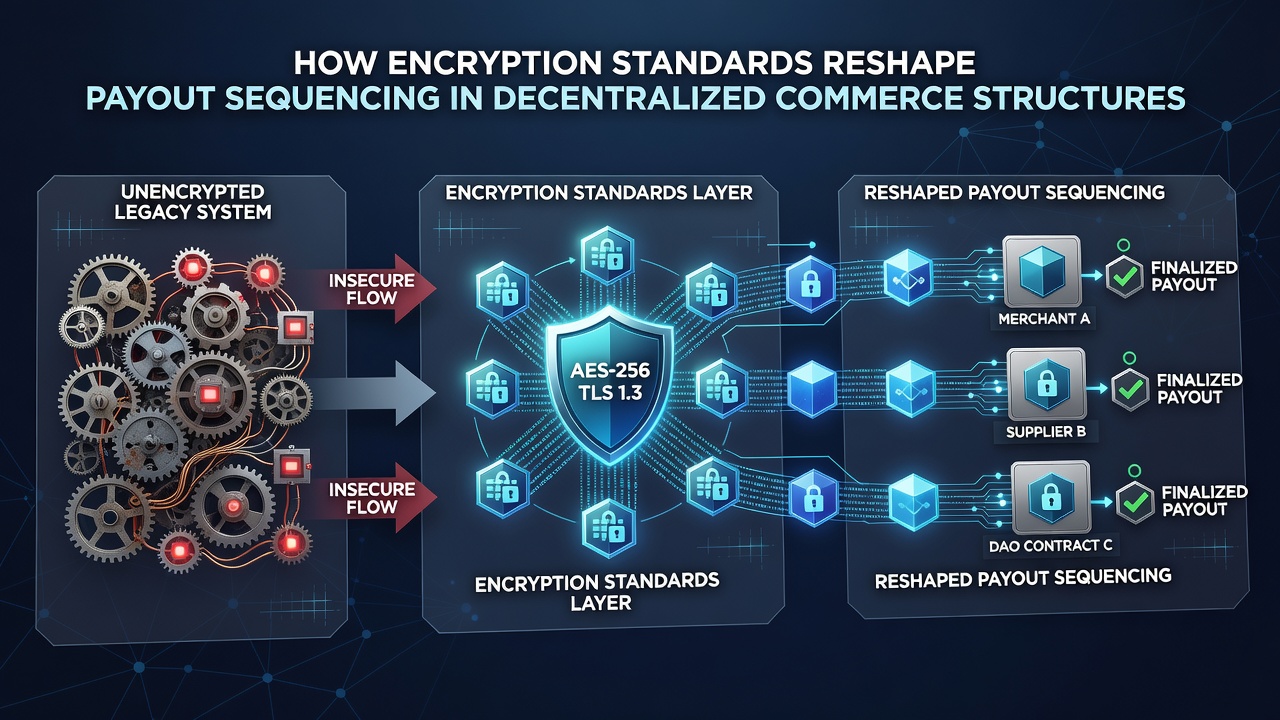
One documented workflow involves three vendors sharing a single customer payment. The first vendor's encrypted invoice clears in 2.3 seconds under current standards, the second requires 3.1 seconds because its record carries an additional compliance hash, and the third waits until both prior proofs sit in the immutable block. Platforms adjust this sequence by encrypting the entire batch under a single session key, yet the underlying ledger still enforces strict ordering to prevent double-spend attempts. Figures from distributed ledger analytics firms indicate that batch encryption cut average payout latency by 27 percent while preserving the same sequential integrity rules.
Regulatory and Technical Standards Driving Change
Standards bodies continue to publish updated encryption requirements that affect how marketplaces structure payout logic. The European Commission's digital finance package, published in 2025, mandates that cross-border decentralized transactions employ encryption methods capable of resisting quantum attacks by 2028, prompting platforms to redesign their sequencing engines ahead of that deadline. Similarly, guidance from the Monetary Authority of Singapore outlines minimum key lengths and signature schemes that increase per-transaction overhead, leading developers to insert conditional release gates that hold later payouts until earlier encrypted records finalize.
Academic studies published by the University of Tokyo's blockchain research group demonstrate that when encryption verification exceeds a threshold of 4.5 seconds per record, marketplaces begin reordering vendor queues to maintain overall throughput. Those reordering decisions appear in public contract code as priority multipliers attached to each encrypted payload, allowing high-volume vendors to leapfrog others once cryptographic checks finish. The same studies note that networks using shorter, classical-only signatures maintain tighter sequencing windows but face higher long-term migration costs once quantum-resistant standards become compulsory.
Conclusion
Encryption standards shape payout sequencing in decentralized commerce by controlling the duration and ordering of cryptographic verification steps that every transaction must complete. Platforms respond with batching techniques, threshold signatures, and conditional release logic that keep settlement flows predictable even as standards evolve. Data from multiple networks shows measurable shifts in vendor receipt times whenever new encryption suites deploy, and regulatory timelines set for 2028 continue to drive further adjustments in sequencing engines across distributed marketplaces.