How Velocity Limits in Credit Card Processing Shape Inventory Management Strategies for Online Retailers During Peak Periods
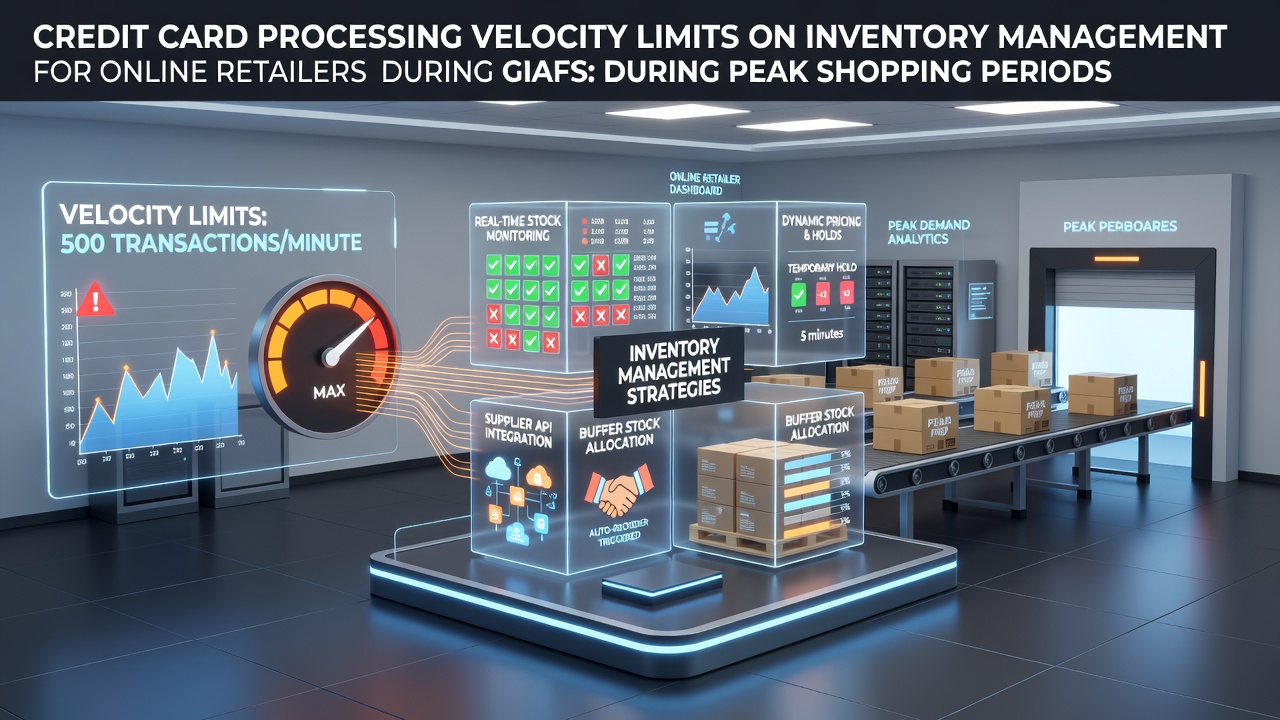
Velocity limits in credit card processing function as automated thresholds that cap the number of transactions or total value processed from a single card within defined time frames, and online retailers encounter these controls most acutely when demand spikes during seasonal peaks. These mechanisms, implemented by issuers and networks to curb fraud patterns such as card testing, directly influence how much inventory merchants can realistically move before authorization failures begin to accumulate. Retailers who track historical approval rates alongside velocity rule sets often adjust stock replenishment cycles to match the volume that processing systems will reliably accept rather than risk holding excess goods that cannot convert into completed sales.
Mechanics of Velocity Controls in High-Volume Environments
Payment processors apply velocity rules at multiple layers, including per-card, per-account, and per-merchant levels, so that a sudden cluster of small-value attempts triggers declines even when the underlying cards remain valid. During periods when traffic multiplies, such as holiday windows or promotional events, these layered checks compress the effective sales capacity below the raw demand signal that inventory planners receive from marketing analytics. Merchants who integrate real-time authorization feedback into their enterprise resource planning systems can recalibrate reorder points on the fly, preventing overcommitment to stock that velocity caps will ultimately prevent from clearing.
Inventory Adjustments Triggered by Authorization Data
Figures from payment network reports show that peak-period decline rates tied to velocity rules can reach double the baseline levels observed in off-peak months, prompting retailers to segment inventory into velocity-resilient categories such as lower-priced items that stay under per-transaction thresholds. One distribution center study conducted by a North American logistics research group found that merchants who aligned safety stock calculations with historical velocity-triggered decline percentages reduced unsold units by measurable margins at the close of each campaign window. Because velocity enforcement occurs at the issuer level, retailers cannot bypass the limits through simple volume increases and instead shift toward pre-authorization holds or split shipments that keep individual orders below detection thresholds.
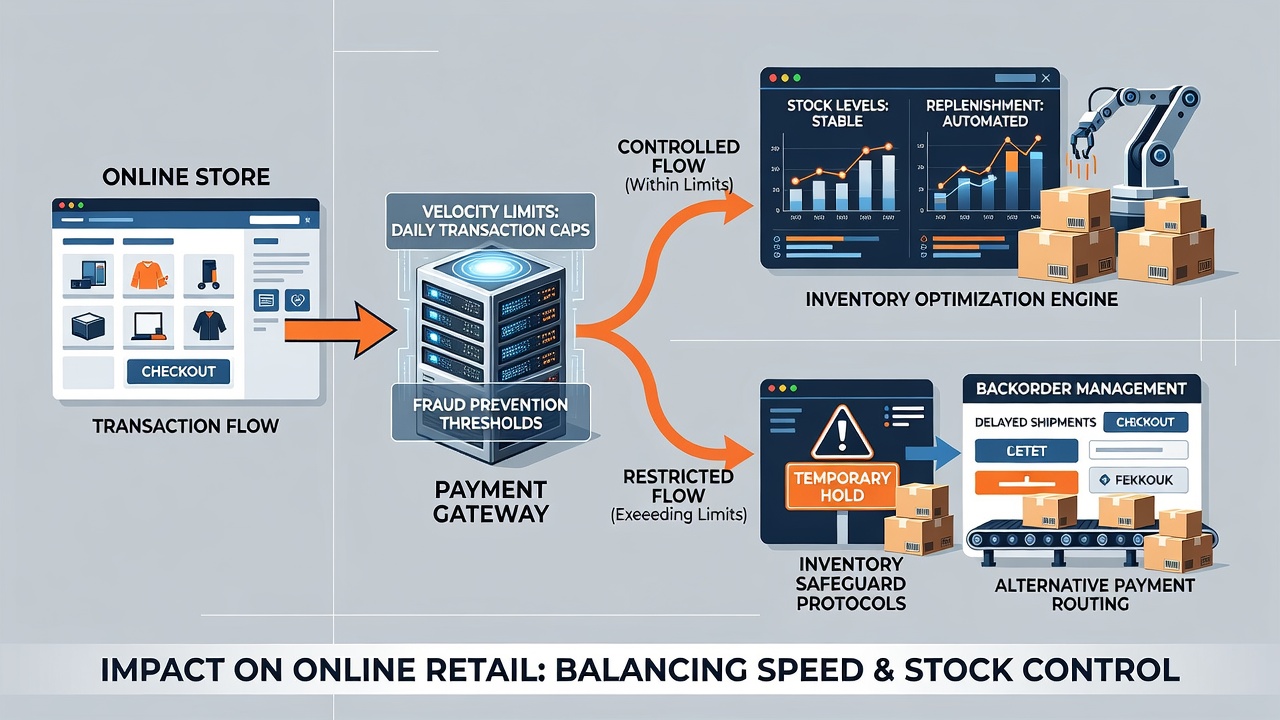
Supply chain teams therefore incorporate authorization success curves into demand forecasting models, treating velocity-related drop-offs as a predictable constraint rather than an anomaly. This practice produces tighter alignment between purchase orders and the subset of demand that processing rails will actually clear, especially when July 2026 promotional calendars overlap with summer clearance events that already strain both bandwidth and fraud monitoring resources.
Regional Regulatory Influences on Velocity Thresholds
Regulatory frameworks in different jurisdictions set baseline expectations for how issuers must calibrate velocity parameters, and merchants operating across borders must reconcile these variations when setting regional inventory allocations. European Central Bank analyses of payment security standards document how velocity settings interact with strong customer authentication mandates, creating additional friction points that affect cross-border order fulfillment rates. Meanwhile, data compiled by Payments Canada illustrates parallel patterns in domestic e-commerce where velocity rules intersect with seasonal volume surges, leading retailers to maintain separate stock buffers for markets with stricter issuer policies.
Operational Responses Among Multi-Channel Sellers
Retailers who operate both direct-to-consumer sites and marketplace storefronts often route orders through the channel whose processor applies the most lenient velocity parameters for a given card type, thereby stretching inventory utilization without violating any single platform's risk profile. Warehouse management software now commonly ingests velocity decline logs alongside sell-through rates, enabling automated purchase order triggers that reflect the true conversion ceiling rather than gross traffic projections. Observers note that this data-driven approach has become standard practice among mid-sized online operations that lack the negotiating leverage to request custom velocity exceptions from acquiring banks.
Conclusion
Velocity limits embedded in credit card processing establish hard boundaries on transaction flow that online retailers must factor into every layer of inventory planning during peak demand windows. By folding authorization performance metrics into replenishment algorithms and maintaining differentiated stock strategies across regions, merchants convert these constraints into measurable parameters that guide purchasing decisions. The resulting discipline produces inventory positions that more closely match the volume of orders that issuers and networks will actually approve, reducing both stockouts on velocity-compliant items and excess holdings on categories that routinely encounter blocks.