Mapping Settlement Cascades Through Vendor Liquidity Webs in Decentralized Marketplace Structures
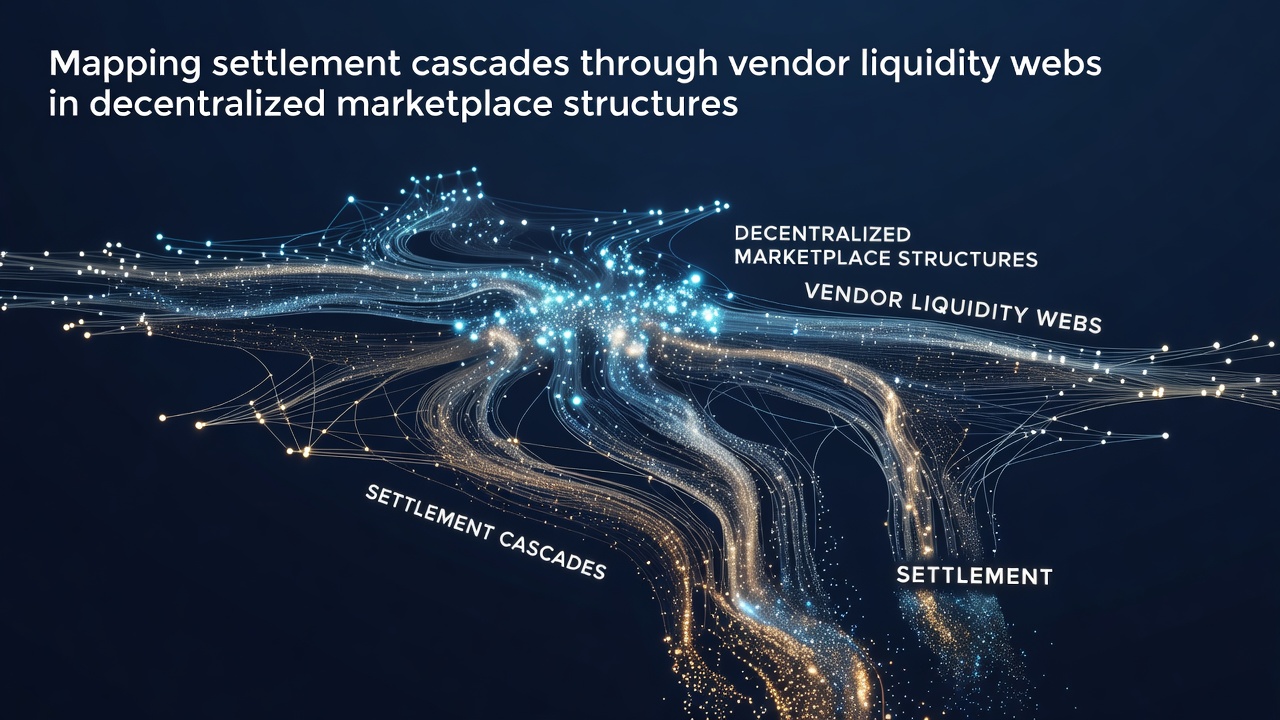
Decentralized marketplace structures rely on distributed networks where vendors connect through shared liquidity pools rather than central clearinghouses, and settlement cascades emerge when funds move across multiple parties in sequence. These webs form when individual sellers link their token holdings or stablecoin reserves to facilitate instant exchanges without traditional banking intermediaries, and observers note that transaction flows can ripple outward from a single purchase event to affect dozens of downstream vendors within minutes.
Core Mechanics of Liquidity Webs
Vendor liquidity webs operate through smart contract protocols that automatically route payments across peer-to-peer connections, and data from platform analytics shows average cascade lengths extending to eight or nine hops before final settlement completes. Each node in the web maintains a reserve balance that adjusts in real time as incoming and outgoing transactions occur, while algorithms prioritize routes with the highest available liquidity to minimize slippage. Researchers at institutions studying distributed ledger systems have documented how these webs reduce settlement times compared to legacy batch processing methods that once required hours or days.
Tokenized assets serve as the connective tissue, allowing vendors to exchange value without converting back to fiat at every step, and June 2026 saw several major platforms integrate cross-chain bridges that expanded web reach across previously isolated blockchain environments. This expansion created new cascade patterns where liquidity from one chain could flow into another through automated market makers, and figures from network monitoring tools reveal increased transaction volumes during that period as vendors adapted to the broader connectivity.
Tracing Cascade Patterns in Practice
Settlement cascades begin with an end-user purchase that triggers an initial transfer to the primary vendor, yet the process rarely stops there because many sellers immediately redistribute portions of received funds to their own suppliers or service providers within the same network. One documented pattern involves freelance designers receiving payment for digital goods, then routing 40 percent of those tokens onward to hosting providers and software licensors that operate on the same decentralized platform, and analysts tracking these flows note the entire sequence often resolves in under four minutes when liquidity remains sufficient at each node.
Visualization tools now map these movements by logging wallet addresses and contract interactions, creating graphs that highlight dense clusters where high-volume vendors serve as central hubs. Such clusters accelerate cascades because they maintain deeper reserves, whereas peripheral vendors experience longer delays when liquidity thins along the path. Industry reports indicate that platforms introduced dynamic rerouting features in early 2026 to bypass low-liquidity nodes automatically, reducing failed settlement attempts by measurable margins.
Technological Infrastructure Supporting the Webs
Decentralized marketplaces employ layered protocols that combine automated market makers with oracle feeds for price data, ensuring liquidity calculations stay accurate even as market conditions shift rapidly. These systems log every hop in a cascade on immutable ledgers, which allows participants to audit flows after the fact without relying on any single authority. Academic studies from Canadian research centers have examined how oracle latency affects cascade reliability, finding that sub-second updates correlate with fewer interruptions in multi-vendor chains.
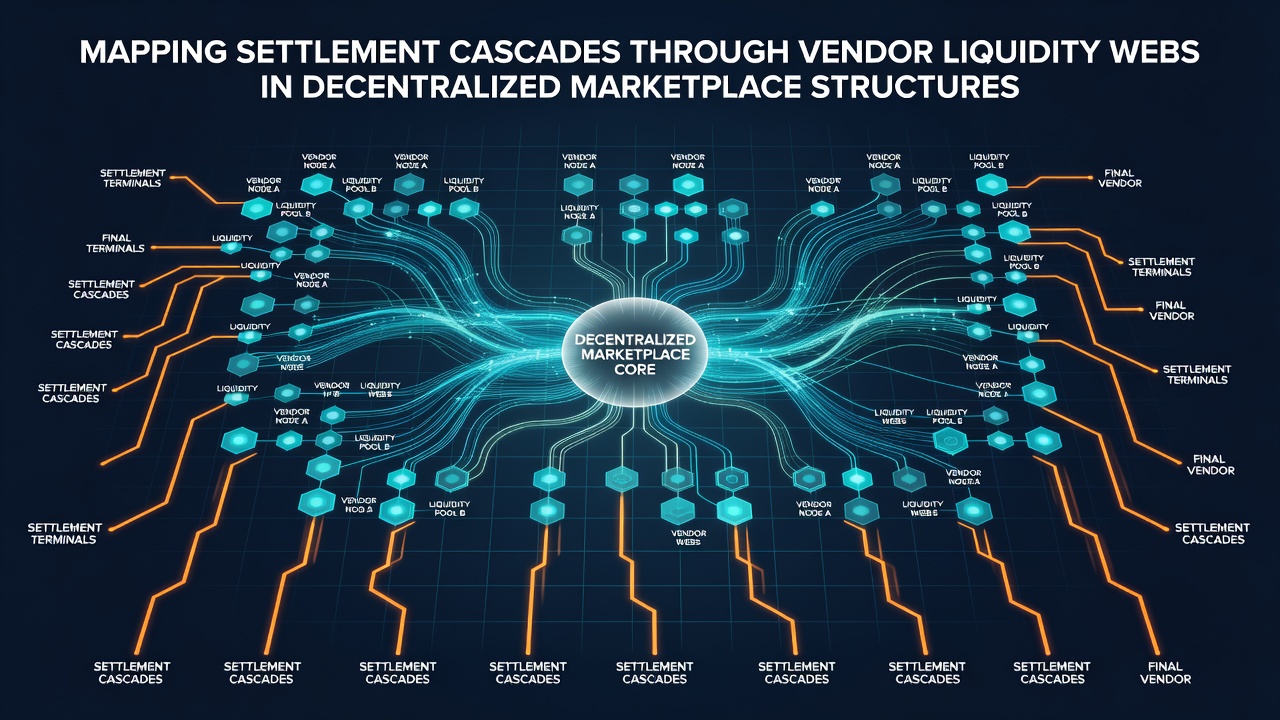
Security layers incorporate multi-signature requirements and time-locked releases that prevent premature fund movements during active cascades, and European Central Bank working papers on distributed finance highlight the role of these controls in maintaining stability across growing networks. As web complexity increases, vendors adopt monitoring dashboards that flag potential bottlenecks before they disrupt downstream settlements, and the result appears in reduced variance of completion times across thousands of daily transactions.
Regulatory and Operational Considerations
Authorities in various regions have begun examining how settlement cascades intersect with existing payment regulations, particularly when value crosses borders through decentralized channels. Australia's Treasury released guidance in 2025 on digital asset flows that touches on transparency requirements for multi-party settlements, while similar discussions continue in other jurisdictions. Vendors operating within these webs must therefore maintain records that demonstrate compliance even when funds pass through multiple automated steps rather than direct transfers.
Operational resilience depends on maintaining adequate reserve ratios at each node, and platform operators publish aggregate statistics showing average liquidity depth across different vendor categories. These metrics help participants anticipate where cascades might slow, and adjustments to incentive structures encourage wider distribution of reserves to prevent over-reliance on a few central hubs.
Conclusion
Mapping settlement cascades through vendor liquidity webs reveals the interconnected nature of decentralized marketplace operations, where each transaction can influence multiple parties through automated redistribution paths. Current infrastructure developments as of June 2026 continue to refine routing efficiency and transparency tools, allowing clearer visibility into how funds progress across networks. Observers continue to track these patterns as marketplaces scale, focusing on data that shows measurable improvements in settlement speed and reliability when liquidity remains distributed across the web.