The Interplay Between Authorization Timing and Vendor Payout Sequencing in Platform Economies
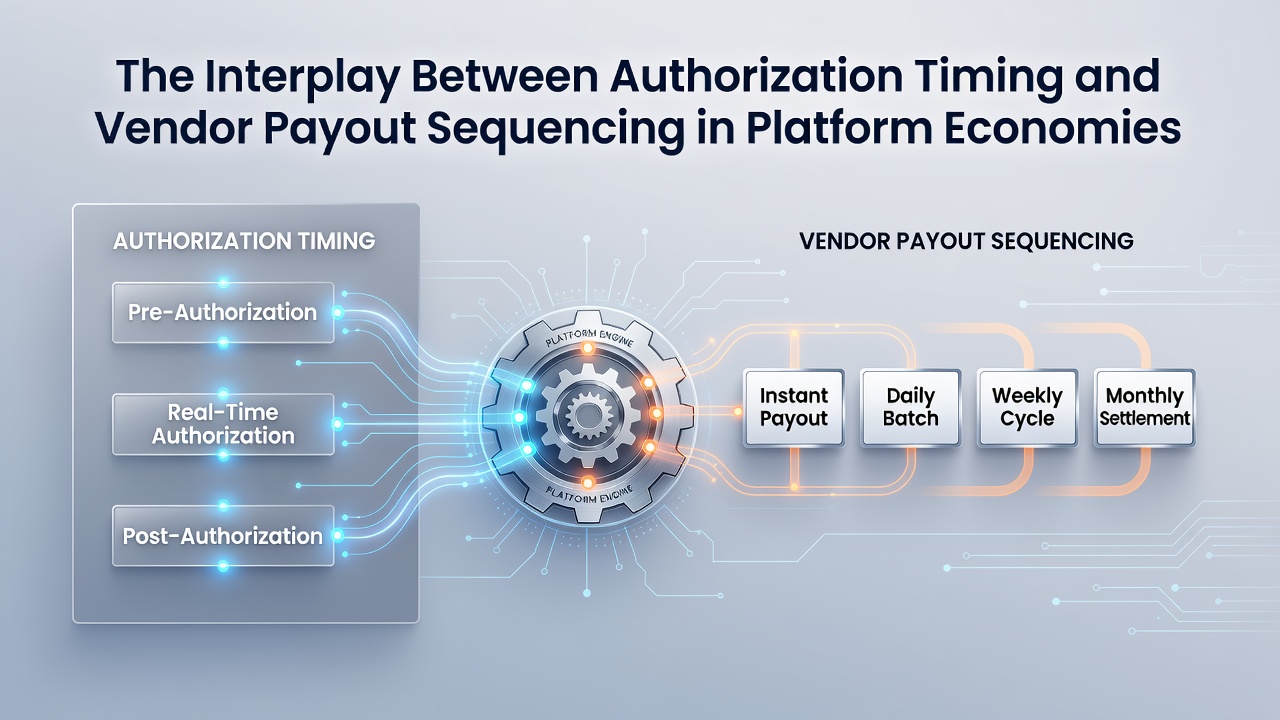 Platform economies rely on precise coordination between when transactions receive authorization and when vendors receive their funds. Authorization timing determines the moment a payment processor verifies and reserves funds from a buyer, while vendor payout sequencing dictates the order and schedule for distributing those funds to sellers or service providers. These two elements interact directly in multi-sided platforms where buyers, vendors, and intermediaries all operate within shared transaction streams.
Authorization Timing Fundamentals
Authorization occurs at the point of sale or checkout when a platform sends a request to the card network or payment rail. The process places a temporary hold on buyer funds without immediate transfer. Platforms often extend this window to accommodate delivery confirmations or service completions, which stretches from minutes in digital goods sales to several days in physical product marketplaces. Research from the Federal Reserve shows that extended authorization holds reduce failed captures by aligning reserves with actual fulfillment events.
Timing variations emerge across payment methods as well. Credit card authorizations typically clear within seconds yet allow holds lasting up to seven days, whereas bank transfers or digital wallets introduce different verification layers that shift the entire sequence downstream. Observers note that platforms adjust authorization windows based on transaction risk profiles, with higher-value orders receiving longer review periods before capture completes.
Vendor Payout Sequencing Mechanics
Payout sequencing follows a structured order once funds move from authorization to capture. Platforms batch captured amounts and release them according to predefined cycles, often daily, weekly, or upon reaching thresholds. This sequencing protects platform liquidity while meeting vendor expectations for timely access to earnings. Data from payment network analyses indicate that sequenced releases cut operational overhead by grouping transfers to multiple vendors into single settlement files.
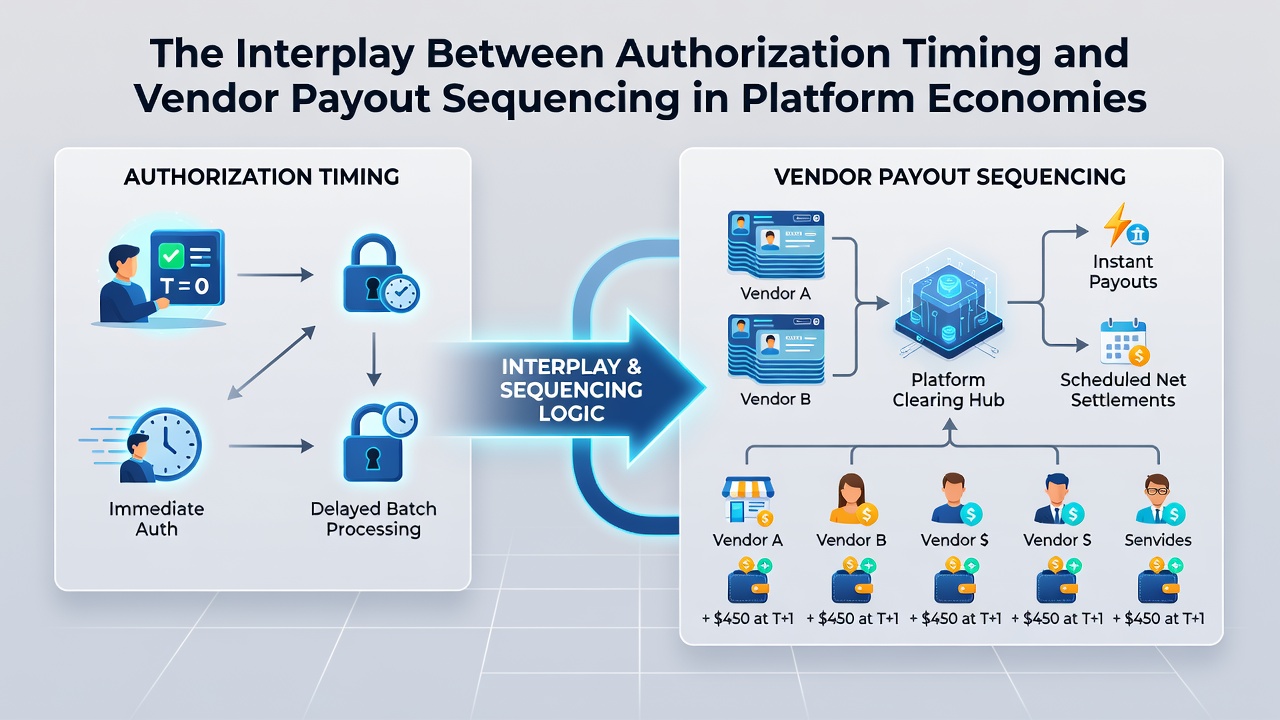
Sequencing rules commonly prioritize high-volume vendors or those with established compliance histories. Smaller vendors may wait until aggregate platform settlements reach minimum batch sizes, creating staggered release patterns across the vendor base. European Central Bank documentation on retail payment systems highlights how these ordered sequences maintain stability in high-volume environments by preventing simultaneous large outflows.
How Authorization Timing Shapes Payout Sequences
The duration of authorization holds directly influences when captured funds become available for sequencing. Longer holds delay the capture step, which in turn postpones the start of payout batches. Platforms operating in June 2026 have refined these linkages through automated triggers that release vendor payments only after successful capture confirmation across all linked authorizations. This creates a cascading effect where early authorization failures ripple forward to adjust entire payout queues.
Real-time authorization systems shorten the gap between buyer approval and vendor eligibility, enabling faster sequencing cycles. Conversely, manual review periods for flagged transactions extend the timeline and force platforms to maintain larger reserve pools before any vendor disbursements occur. Industry reports reveal that marketplaces using synchronized timing protocols achieve more predictable cash flow patterns for their vendor networks.
Platform Examples and Operational Patterns
Take a global freelance marketplace where project-based payments undergo authorization at contract signing yet remain on hold until milestone verification. The platform sequences payouts only after each authorization converts to capture, which aligns vendor receipts with completed work stages. Similar patterns appear in e-commerce sites that authorize at checkout but sequence vendor settlements after shipping confirmations arrive.
Multi-vendor platforms often segment their payout queues by region or product category to match varying authorization success rates. Vendors in markets with slower banking rails receive sequenced releases that account for the extended authorization windows typical in those areas. This approach keeps overall platform liquidity balanced while vendors experience consistent though staggered access to funds.
Regulatory and Compliance Influences
Payment regulations require platforms to document the full chain from authorization through to vendor payout. Authorities in different regions enforce reporting standards that tie authorization timestamps to settlement records, ensuring traceability across the sequence. Platforms maintain audit logs that map each authorization event to its corresponding payout batch, which supports compliance checks without disrupting operational flow.
Observers tracking these systems note ongoing refinements in how platforms handle edge cases such as partial captures or authorization reversals. These events trigger immediate adjustments to downstream payout sequences to prevent over-disbursement to vendors. Such mechanisms have become standard in platforms handling cross-border transactions where timing discrepancies between regions add complexity.
Conclusion
The relationship between authorization timing and vendor payout sequencing forms a core operational backbone for platform economies. Precise coordination of these elements enables platforms to manage liquidity, meet vendor expectations, and satisfy regulatory requirements simultaneously. As transaction volumes grow, the synchronization between these processes continues to determine efficiency across digital marketplaces and service networks.