Timing Lags in Fund Releases: Impacts on Temporary Retail Operations Across Platforms
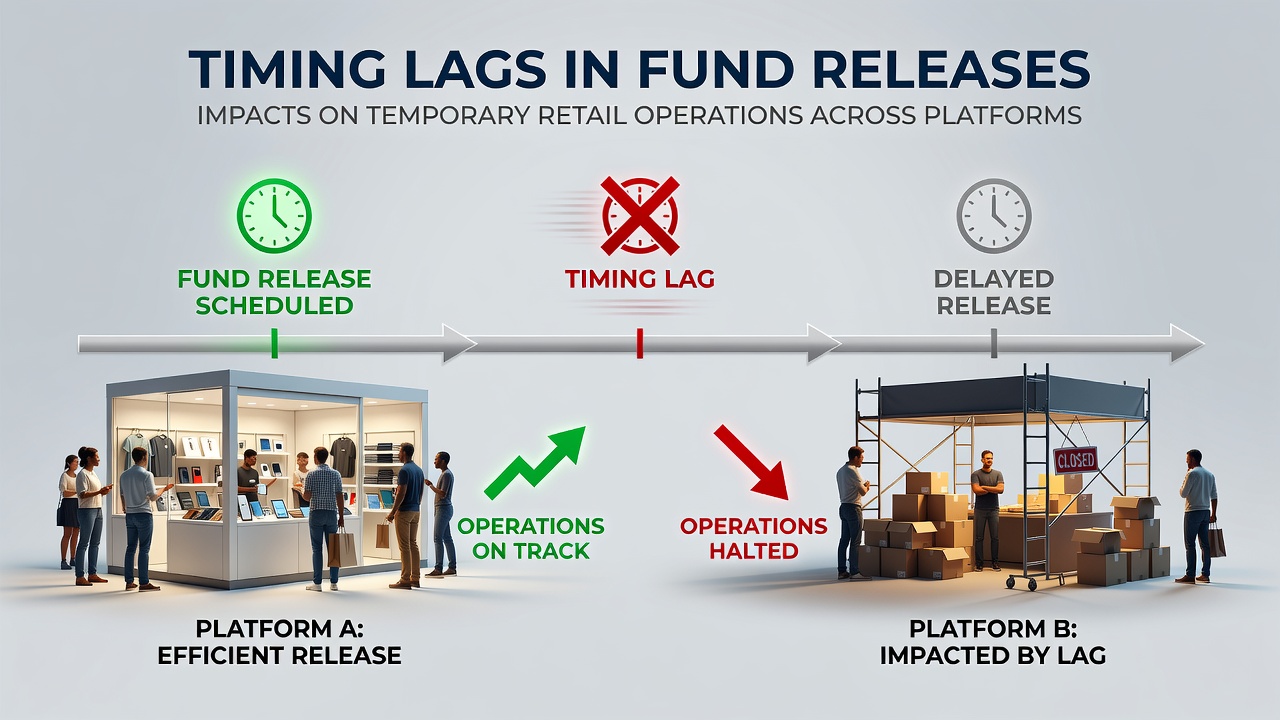
Payment systems across digital marketplaces and point-of-sale networks often experience delays between transaction authorization and actual fund availability in merchant accounts, and these timing lags create measurable disruptions for temporary retail operations that rely on rapid cash flow cycles. Temporary sellers such as pop-up vendors, seasonal event operators, and short-term marketplace participants operate with narrow margins and limited reserves, which means even modest settlement delays can interrupt inventory replenishment and operational continuity.
Mechanics of Settlement Timing in Multi-Platform Environments
Authorization occurs at the moment of purchase when card networks verify available funds, yet settlement involves batch processing through acquiring banks and card schemes that typically clears funds within one to three business days for standard accounts. Temporary retail operations on platforms that aggregate multiple vendors encounter additional layers because funds route through intermediary ledgers before reaching individual seller accounts. Research from the Federal Reserve indicates that average settlement windows for small merchants extend by 24 to 48 hours during high-volume periods, particularly when platforms batch transactions across regions.
These extended windows arise from reconciliation requirements that verify transaction authenticity before release, and temporary operators who depend on daily or weekly sales cycles feel the pressure when expected deposits arrive later than projected. Platform algorithms that prioritize risk scoring further influence release speed, with newer or lower-volume sellers often placed in longer queues until transaction patterns stabilize.
Effects on Cash Flow for Short-Term Retail Models
Pop-up stores and event-based vendors schedule purchases and payroll around anticipated deposits, so a lag of several days forces adjustments in supplier payments and staffing decisions. Data compiled by the Bank of Canada shows that seasonal retail participants report a 15 to 20 percent increase in short-term borrowing needs when settlement timing shifts by more than 48 hours. Temporary operations across e-commerce platforms that facilitate flash sales or limited-time listings face similar constraints because they must cover platform fees and advertising costs upfront while waiting for net proceeds.
Platform Variations in Release Protocols
Different marketplaces apply distinct settlement schedules that affect temporary sellers differently. Some platforms release funds daily once a threshold is met, whereas others aggregate over weekly periods or tie releases to performance metrics. In July 2026, updates to cross-border processing standards introduced additional verification steps for international transactions, which lengthened average release times by up to 36 hours for vendors operating across multiple regions. Temporary retail operators who rotate between platforms encounter inconsistent timelines that complicate forecasting and resource allocation.
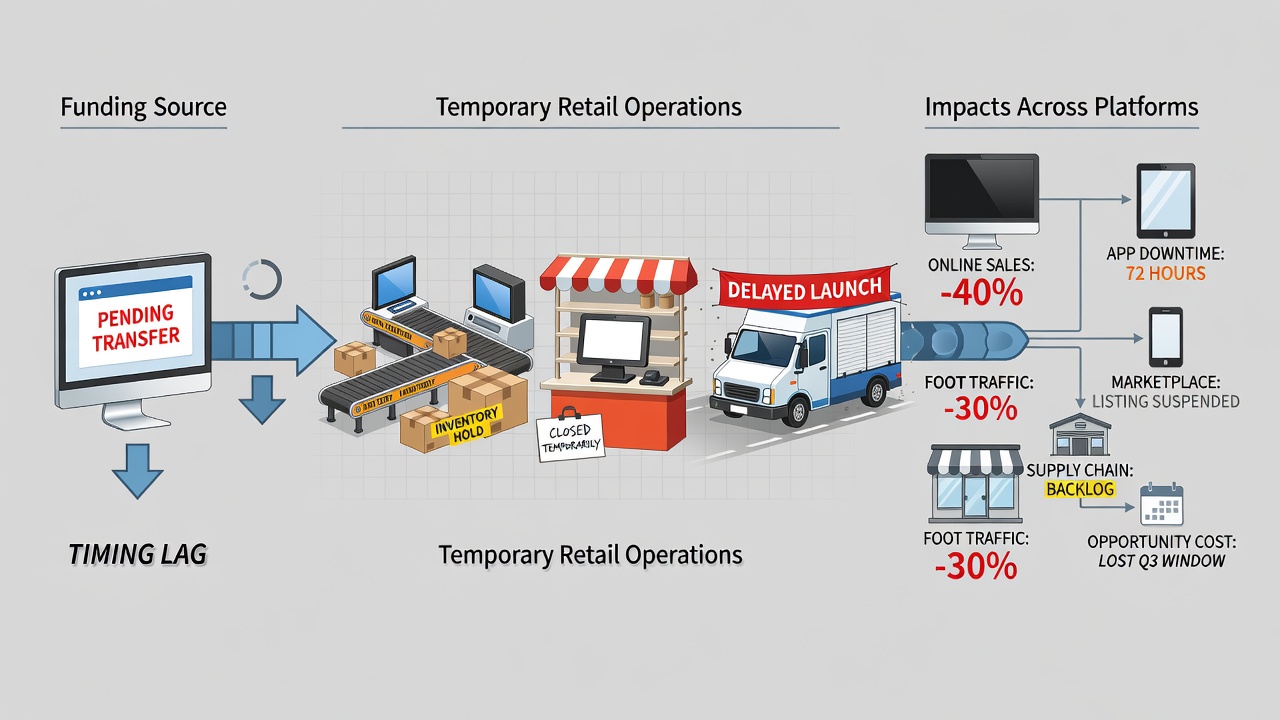
Marketplaces that integrate instant payout options charge additional fees that reduce net margins for operators already navigating thin profitability. Those who study these patterns note that vendors with access to working capital lines maintain steadier operations, while those without such buffers experience inventory gaps or reduced participation in subsequent sales cycles.
Operational Adjustments Observed Across Temporary Retail Networks
Retail operators respond to predictable lags by staggering supplier orders, negotiating extended payment terms with wholesalers, or maintaining parallel accounts across platforms to smooth incoming cash. Studies from academic research groups at the University of Melbourne document how event-based sellers coordinate inventory deliveries to align with projected settlement dates rather than sale dates. Platform tools that provide real-time visibility into pending releases help operators plan, yet adoption remains uneven among smaller or temporary participants who lack dedicated financial staff.
Payment processors that offer accelerated funding programs for qualifying merchants reduce the effective lag period, though eligibility criteria often exclude newer temporary accounts until transaction history accumulates. Observers tracking these dynamics report that coordinated use of multiple settlement channels allows some operators to maintain continuity even when individual platform releases experience delays.
Conclusion
Timing lags between authorization and fund release continue to shape the operational landscape for temporary retail participants who operate across diverse platforms. Settlement protocols, risk verification layers, and regional processing differences determine how quickly proceeds become available, and these factors directly influence inventory management, staffing, and participation decisions for short-cycle retail models. As platforms refine batch reconciliation and introduce tiered payout options, temporary operators adjust their financial planning around the resulting timelines.