Tracing Settlement Delays Across Freelance Platforms That Blend Instant Mobile Checkouts with Scheduled Client Billings
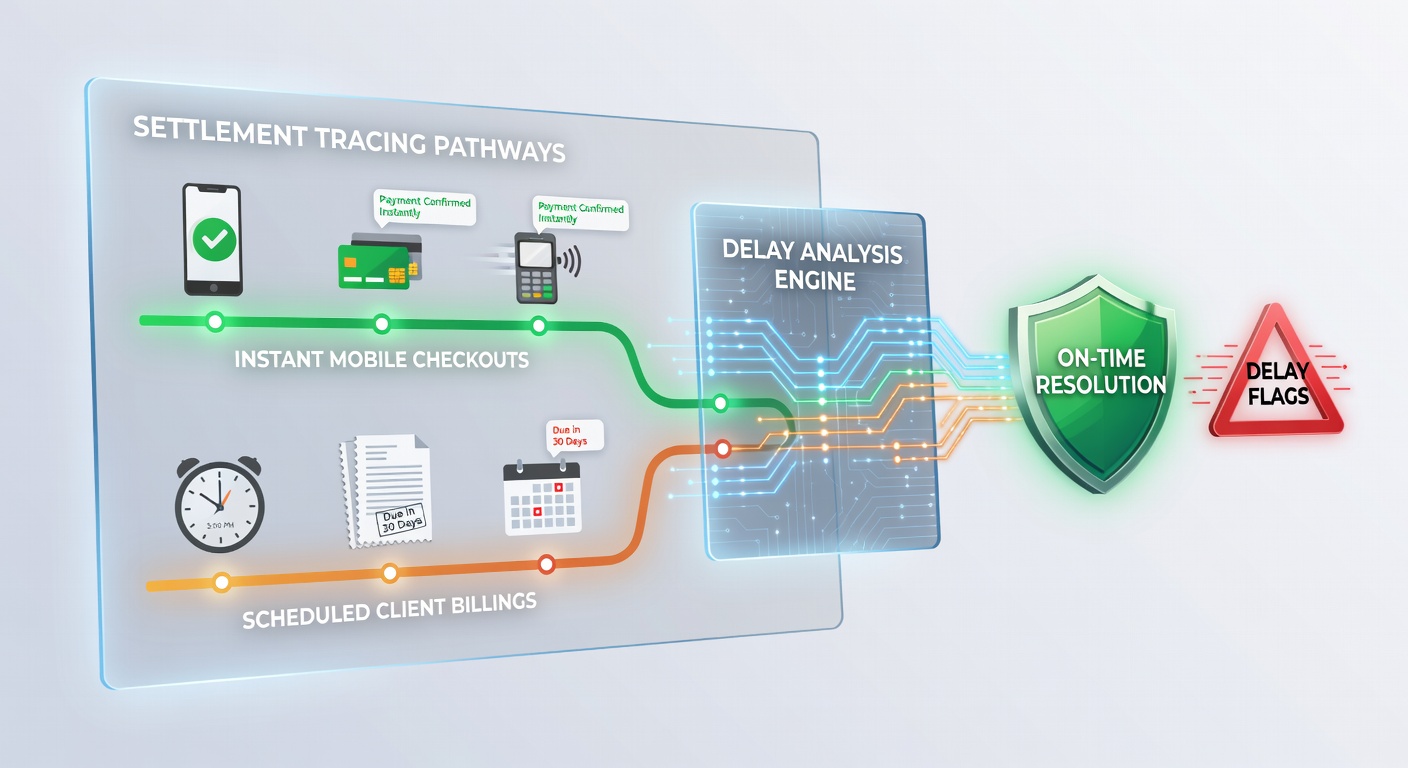
Freelance platforms that combine instant mobile checkouts with scheduled client billings create distinct payment flows where funds move through separate channels before reaching the same destination accounts, and settlement delays often surface at the points where these channels intersect. Research from payment systems analysts indicates that such hybrid models process billions in transactions annually, yet reconciliation between immediate payouts and recurring invoice cycles introduces timing mismatches that extend settlement periods beyond standard windows.
Payment Flow Structures in Hybrid Systems
Instant mobile checkouts allow freelancers to receive portions of earnings within minutes of client approval through integrated wallets or linked bank transfers, while scheduled client billings handle larger project invoices on fixed cycles such as bi-weekly or monthly intervals. Data from industry transaction logs shows that platforms route instant portions through real-time rails like ACH push or card networks, whereas scheduled elements rely on batch processing that aligns with client payment terms. Observers note that when a single project triggers both an instant partial release and a later scheduled balance, the system must synchronize timestamps and verification flags before final crediting occurs.
Those who monitor these ecosystems report that settlement delays frequently trace back to verification steps applied differently across the two pathways, creating temporary holds until all components clear. In June 2026, updated reporting requirements from several central banks prompted platforms to log these intersections more granularly, revealing patterns where delays averaged between two and five business days for hybrid transactions compared to one day for purely instant flows.
Key Points Where Delays Emerge
Delays commonly originate during currency conversion when instant mobile segments involve cross-border elements while scheduled billings remain in a single currency, forcing the platform to pause until exchange rates stabilize within acceptable bands. Another frequent source involves client-side authorization windows, where an invoice scheduled for the 15th of the month may not release funds until the 18th due to weekend cutoffs or banking holidays, even if an instant checkout occurred days earlier for a milestone payment. Researchers at academic institutions studying digital economies have documented cases where mismatched KYC statuses between the two channels extend the overall settlement timeline, particularly when one segment requires additional identity confirmation.
Platform operators address these by maintaining separate ledgers for each payment type until reconciliation engines match the records, yet external factors such as network outages in mobile payment providers or delays in client bank confirmations compound the issue. Figures from transaction monitoring services reveal that global freelance networks experience elevated delay rates during peak invoicing periods at the end of each quarter, when scheduled billings cluster and strain the synchronization processes.
Methods for Tracing and Monitoring Delays
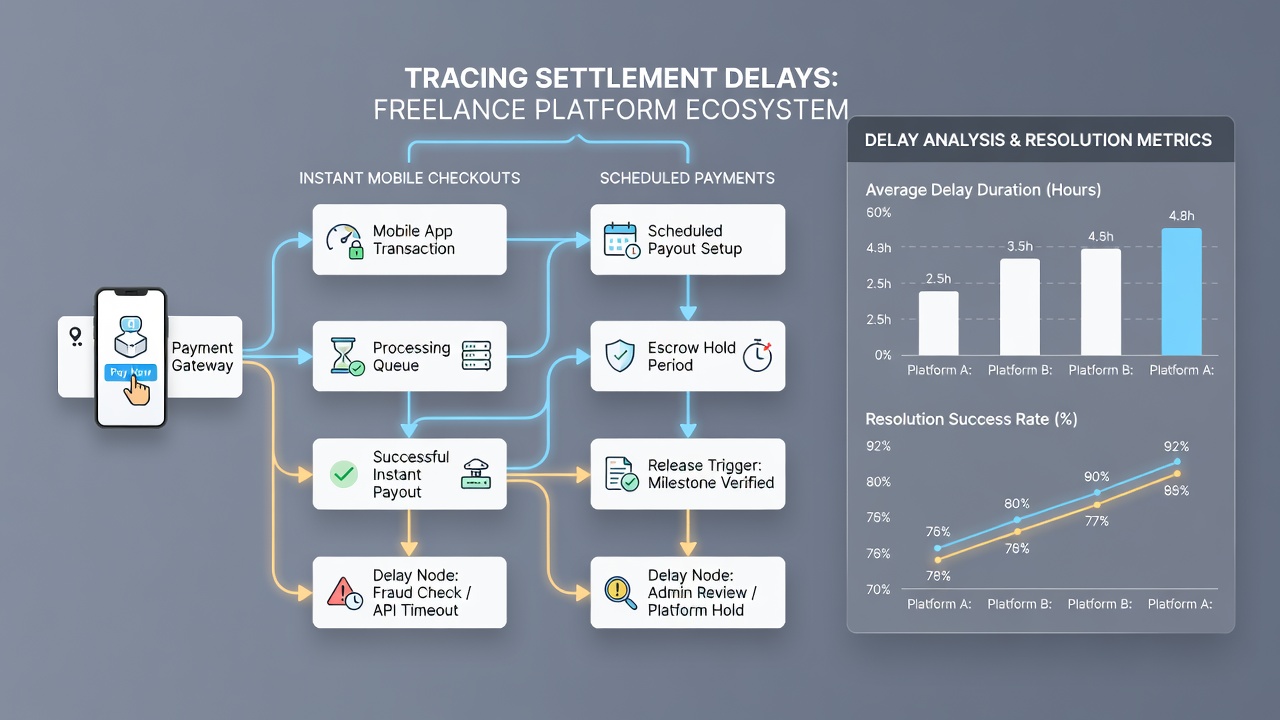
Platforms employ automated tracing tools that tag each transaction segment with unique identifiers, allowing teams to follow funds from the initial mobile checkout through to the final scheduled credit without manual intervention in most cases. These systems flag anomalies when timestamps diverge beyond predefined thresholds, triggering alerts that route to compliance teams for review. According to reports issued by the Bank for International Settlements, standardized tracking protocols across regions help identify whether delays stem from internal processing or external banking networks, enabling more precise interventions.
One study released by a Canadian research consortium examined over 50,000 hybrid freelance transactions and found that approximately 12 percent encountered delays exceeding three days, primarily due to incomplete data handoffs between mobile and billing modules. Platform dashboards now incorporate real-time visualizations of these flows, presenting aggregated metrics on average settlement durations segmented by transaction type and geographic region. Such visibility assists operators in pinpointing recurring bottlenecks without disrupting user experiences during active projects.
Regional Variations and Regulatory Influences
Settlement patterns differ across regions because regulatory frameworks dictate how quickly platforms must reconcile instant versus scheduled components, with European Union directives emphasizing consumer protection timelines that influence freelance platform operations differently than frameworks in Asia-Pacific markets. In Australia, recent guidance from financial conduct authorities has encouraged platforms to disclose expected settlement ranges upfront, which has reduced user inquiries about delays but increased backend logging requirements. Cross-border freelance work adds layers when one participant operates under stricter capital reserve rules that affect release speeds for scheduled billings.
Those tracking these developments note that platforms serving North American and European users often implement dual compliance checks to satisfy both local instant payment mandates and international billing standards, extending processing in hybrid scenarios. Transaction data compiled through 2026 indicates gradual improvements as more platforms adopt unified APIs that handle both checkout types within shared verification frameworks.
Conclusion
Tracing settlement delays across freelance platforms requires mapping the intersections between instant mobile checkouts and scheduled client billings, where timing mismatches, verification differences, and external banking factors converge to extend credit timelines. Data collected through mid-2026 demonstrates that enhanced logging and regional regulatory alignment continue to refine these processes, providing clearer pathways for resolution when delays occur. Platforms that maintain detailed segment tracking achieve faster identification of root causes, supporting smoother fund movements for global freelance networks overall.