Velocity Checks: Silent Sentinels Shielding E-Commerce from Card-Testing Swarms
Velocity Checks: Silent Sentinels Shielding E-Commerce from Card-Testing Swarms

Unseen Threats Lurking in Checkout Lines
Online shoppers breeze through checkouts expecting seamless experiences, yet beneath the surface, fraudsters unleash automated swarms testing stolen credit cards in relentless waves; these card-testing attacks, often called carding, probe e-commerce sites with tiny transactions to validate card details before bigger heists, and that's where velocity checks step in as quiet guardians monitoring transaction speeds and volumes to flag anomalies before damage spreads.
Turns out, card testers don't mess around; they deploy bots hitting multiple merchants simultaneously, attempting dozens or hundreds of $1 charges per minute from varied IPs, and without defenses, merchants foot the bill for declines, chargebacks, and lost trust, while customers face unauthorized hits on their statements.
What Exactly Are Velocity Checks?
Velocity checks track the rate of specific actions over defined windows—like transactions per IP address, per card BIN, per email, or even per device fingerprint—triggering blocks or alerts when thresholds exceed norms; experts define these as rules-based systems analyzing patterns such as ten failed attempts from one IP in five minutes, or fifty transactions across new cards from a single session, and they integrate seamlessly into payment gateways without slowing legitimate flows.
But here's the thing: these checks go beyond simple counts; they layer in behavioral signals, combining login attempts with purchase velocities, or matching geolocation shifts against card issuing countries, so a sudden flurry from a data center IP in Eastern Europe trying US cards raises instant red flags.
Data from the PCI Security Standards Council highlights how such controls align with Requirement 8.2, mandating multi-factor checks on high-velocity access, although tailored for payments they adapt those principles to thwart bots mimicking human speed.
The Mechanics of Card-Testing Swarms
Fraudsters harvest card data from breaches or dark web dumps, then script bots to test validity via low-risk buys like gift cards or subscriptions; one swarm might cycle through 10,000 cards across sites in hours, succeeding on a fraction while discarding decliners, and the fallout hits merchants hard with processing fees on each try—often 2.9% plus 30 cents per pop.
Observers note patterns where attacks spike post-data leaks; take the 2024 incident exposing millions from a major retailer, after which velocity spikes appeared globally within days, and sites lacking robust checks saw approval rates plummet as bots overwhelmed queues.
What's interesting is the evolution: early carding used manual inputs, but now AI-driven proxies rotate IPs and mimic mouse movements, making detection trickier, yet velocity metrics cut through by focusing on unnatural paces—humans don't attempt 20 checkouts per minute, period.
How Velocity Checks Neutralize the Swarm
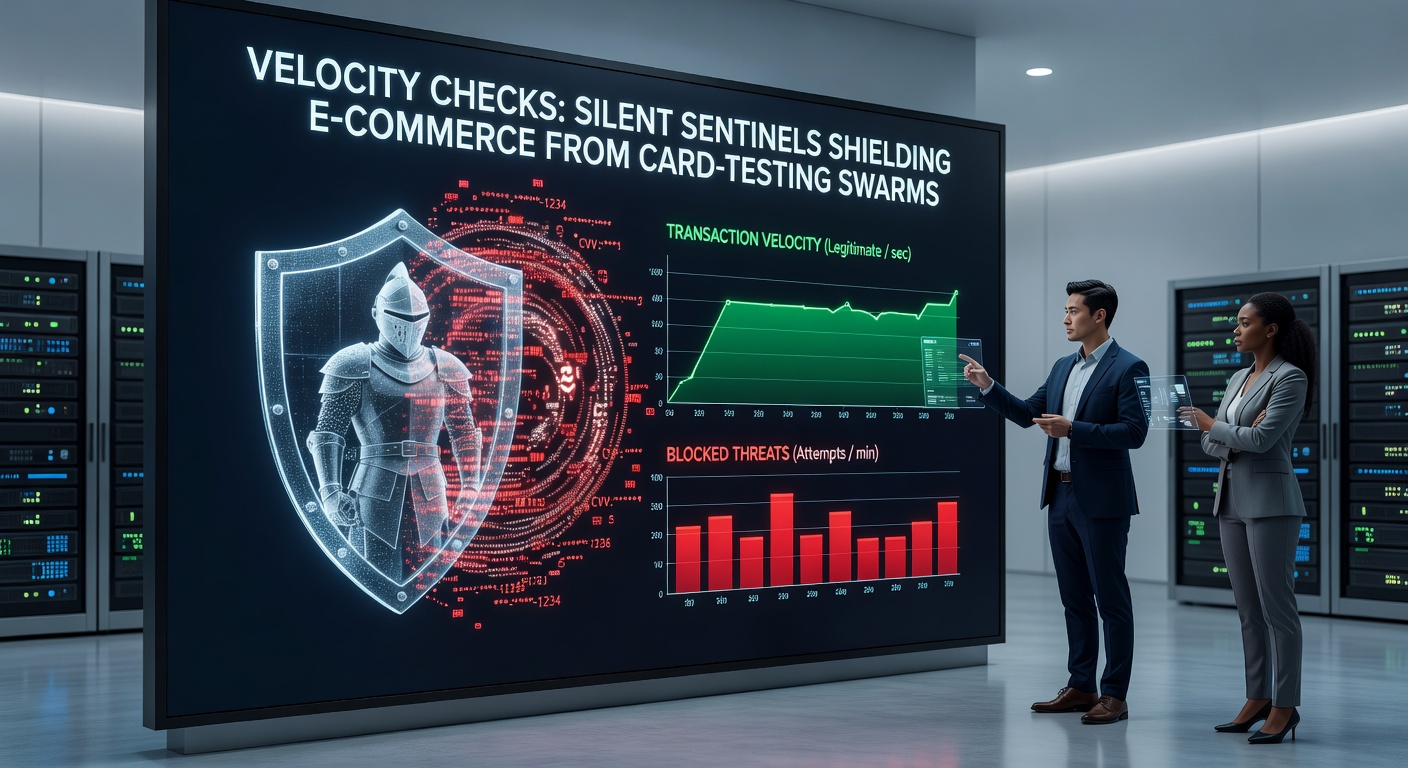
Payment processors embed these checks at authorization stages, setting granular rules—for instance, capping three transactions per card per hour, or alerting on five new cards from one IP daily—and when breached, responses range from soft declines prompting CAPTCHAs to hard blocks throttling the source; one merchant configured IP velocity at 15 attempts per 30 minutes, slashing card-test volume by 92% overnight.
And it stacks with other tools: pair velocity with CVV mismatches or AVS failures, and the net tightens; researchers at Australian Cyber Security Centre report that combined rules reduced fraud losses by up to 40% in tested environments, emphasizing real-time adaptation to emerging patterns.
Case in point: a mid-sized fashion retailer faced weekly swarms in early 2025, losing $50,000 monthly to test fees; after layering BIN velocity limits—two per minute globally—their fraud team watched incidents drop 85%, with legitimate conversions holding steady since rules whitelisted known patterns like flash sales.
Implementing Velocity Checks: Best Practices and Pitfalls
Merchants start by auditing baselines—analyze 90 days of logs to set percentiles, say 99th for transactions per session—then deploy via APIs from gateways like Stripe or Adyen, tuning for business rhythms; high-volume sites adjust for peaks, allowing 100 checkouts per IP during Black Friday but clamping at 5 otherwise, while smaller shops keep it simple at global caps.
Yet challenges arise: false positives snag real customers during surges, so experts recommend A/B testing rules and fallback CAPTCHAs over outright blocks; data indicates over-tight thresholds boost abandonment by 3-5%, but machine learning auto-tunes mitigate that, learning from approved flows to refine dynamically.
Take one SaaS provider who overlooked device velocity; bots hopped fingerprints, but adding browser entropy checks—tracking canvas rendering speeds—paired with session limits caught 70% more attempts without touching honest users.
Real-World Wins and Metrics That Matter
Figures reveal impact: a 2025 LexisNexis study found velocity-enabled platforms cut card-not-present fraud by 35% year-over-year, with e-commerce leaders reporting ROI in weeks via slashed decline costs; another benchmark from a US payments conference showed average test swarm duration shrinking from 45 minutes to under 5 under strict regimes.
So, in high-risk verticals like digital goods—where instant delivery tempts testers—velocity becomes non-negotiable; gaming sites, for example, cap account creations per IP at 3 per day, dovetailing with KYC for ironclad defense.
Looking Ahead: April 2026 and Beyond
As of April 2026, reports from the US Federal Trade Commission signal card-testing surges tied to AI credential stuffing, with incidents up 28% quarter-over-quarter; yet velocity checks evolve too, incorporating graph analytics linking attempts across merchants, and quantum-resistant hashing for future-proofing fingerprints.
Industry watchers predict hybrid models blending rules with unsupervised ML, spotting subtle drifts like gradual IP warming before full swarms launch; Canada's Office of the Superintendent of Financial Institutions echoes this, urging velocity in layered strategies amid rising synthetic identities fueling tests.
Now, with PSD3 looming in Europe—emphasizing real-time fraud signals—providers roll out federated velocity sharing, where consortia flag bad actors site-wide, turning individual shields into network fortresses.
Conclusion
Velocity checks stand as proven bulwarks, quietly dissecting swarm tactics through rate mastery and pattern vigilance; merchants who tune them right reclaim control, minimizing losses while preserving user trust, and as threats morph with tech advances, these sentinels adapt—keeping e-commerce's heartbeat steady against the digital tide.
The reality? In a world of escalating bots, velocity isn't just smart; it's essential, with data consistently showing it slashes risks without the friction of heavier tools.